GUIDE

Pre-Settlement Funding When a Plaintiff Is Facing Eviction or Housing Instability During Litigation

Pre-Settlement Funding When a Plaintiff Is Facing Eviction or Housing Instability During Litigation

Personal injury litigation can last months or years. During that time, plaintiffs who are unable to work or facing mounting medical bills may fall behind on rent or mortgage payments. Housing instability is one of the most serious consequences of the financial pressure that litigation imposes on injured plaintiffs.

For plaintiffs at risk of eviction or foreclosure while a personal injury case is pending, pre-settlement funding may provide an important source of financial support. Understanding how housing instability affects the funding evaluation process and how funding can be used during this period is important for plaintiffs in this situation.

Why Housing Instability Is Common During Litigation

Personal injury plaintiffs often face a combination of reduced income and increased expenses that makes maintaining housing difficult. Contributing factors include:

  • Inability to work due to the injury, resulting in lost wages

  • Accumulating medical bills that compete with housing costs for limited funds

  • Absence of employer-provided disability coverage for self-employed or part-time workers

  • Delays in resolving the case that extend the period of financial strain

  • Insurance companies that delay settlement offers to increase financial pressure on plaintiffs

These pressures can create a situation where a plaintiff must choose between basic needs and the ability to wait for a fair settlement.

How Housing Instability Can Affect a Case

Financial pressure that threatens housing can have indirect effects on personal injury litigation. Plaintiffs who are facing eviction or foreclosure may:

  • Feel compelled to accept a low settlement offer simply to obtain immediate funds

  • Experience difficulty attending medical appointments or legal meetings due to instability

  • Face stress and distraction that affects their ability to participate effectively in their case

  • Make decisions based on short-term financial need rather than long-term recovery potential

Pre-settlement funding can interrupt this cycle by providing the financial stability needed to allow the case to proceed on its merits.

How Pre-Settlement Funding Can Address Housing Needs

Pre-settlement funding is non-restrictive, meaning plaintiffs can use the advance for any purpose including housing costs. Funds may be used to:

  • Pay overdue rent to prevent eviction

  • Cover mortgage payments to avoid foreclosure proceedings

  • Address utility bills or other essential housing-related expenses

  • Provide a financial cushion while income from work remains limited

Using funding to stabilize housing allows plaintiffs to focus on their recovery and their case rather than immediate financial emergencies.

Can Plaintiffs Facing Eviction Still Qualify for Funding?

Yes. Housing instability does not affect a plaintiff's eligibility for pre-settlement funding. Approval depends on the strength of the underlying personal injury claim, not the plaintiff's current financial situation. Approval considerations include:

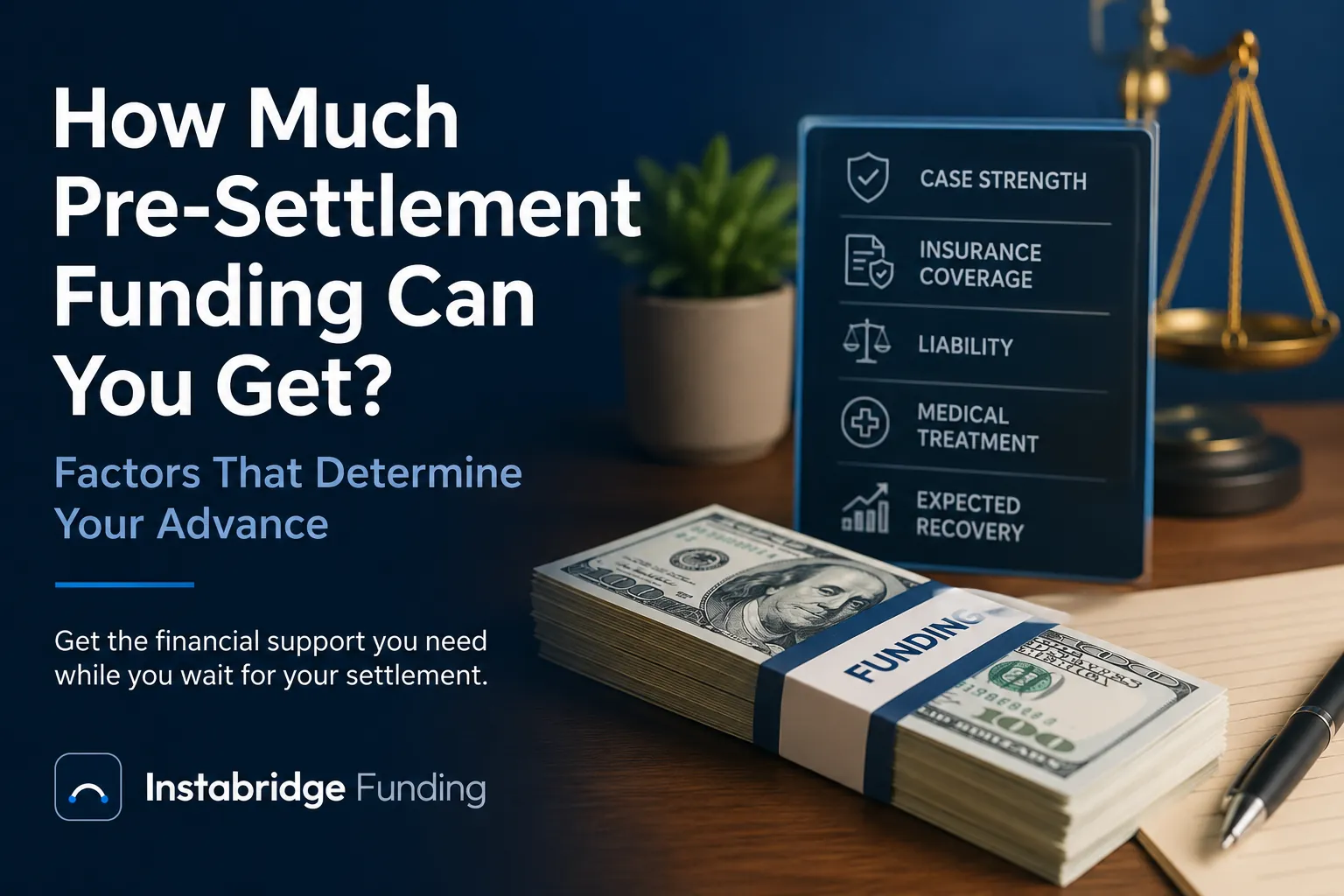
  • Strength of the liability claim and supporting evidence

  • Medical documentation of the injury

  • Insurance coverage available from the defendant

  • Attorney's assessment of case value

  • Stage of litigation

Funding providers evaluate the merits of the case rather than the plaintiff's financial circumstances. A plaintiff facing eviction with a strong personal injury claim may still qualify for a meaningful advance.

How Urgency Affects the Funding Process

Plaintiffs facing imminent eviction or foreclosure may need funding quickly. Most pre-settlement funding providers, including Instabridge, work to process applications efficiently. The timeline typically depends on:

  • How quickly the plaintiff's attorney can provide case documentation

  • The complexity of the liability and damages analysis

  • Whether all required information is available at the time of application

Plaintiffs in urgent housing situations should communicate their circumstances to both their attorney and their funding provider so that the review can be prioritized where possible.

Responsible Funding Evaluation

Funding providers assess applications from plaintiffs facing housing instability on the same basis as all other applications. Evaluation may consider:

  • Strength of the underlying injury claim

  • Available insurance coverage and case value

  • Legal fees and anticipated case costs

  • Any prior advances outstanding

  • Attorney's assessment of realistic recovery

Advances are structured to protect the plaintiff's net recovery at settlement while addressing immediate financial needs. Non-recourse protection ensures repayment occurs only if recovery is obtained.

The Importance of Attorney Coordination

Attorney coordination is important when a plaintiff is facing housing instability. Legal counsel can assist by:

  • Providing case documentation to the funding provider promptly

  • Communicating the urgency of the plaintiff's situation

  • Confirming the strength and status of the underlying claim

  • Advising the plaintiff on how funding will interact with the eventual settlement

Funding providers rely on attorney cooperation to process applications efficiently in time-sensitive situations.

Why Plaintiffs Choose Instabridge

Instabridge understands that financial emergencies do not wait for litigation to conclude. When a plaintiff is at risk of losing their housing while a strong personal injury case is pending, our team works to evaluate and process applications as efficiently as possible. We provide:

  • Clear written payoff disclosures

  • Flat-rate pricing without compounding fees

  • Non-recourse funding protection

  • Responsible advance limits

  • Transparent communication throughout the review process

Our goal is to provide financial support that allows plaintiffs to maintain stability while pursuing the recovery they deserve.

Conclusion: Funding Support When Housing Is at Risk

Housing instability during litigation is a serious consequence of the financial pressure personal injury plaintiffs face. Pre-settlement funding can provide the support needed to prevent eviction or foreclosure and allow a case to proceed without the plaintiff being forced into a premature settlement. If you are facing housing instability while a personal injury case is pending and need financial support, contact Instabridge. Our team will review your case carefully, coordinate with your attorney, and help you determine whether pre-settlement funding is an appropriate option.

Personal injury litigation can last months or years. During that time, plaintiffs who are unable to work or facing mounting medical bills may fall behind on rent or mortgage payments. Housing instability is one of the most serious consequences of the financial pressure that litigation imposes on injured plaintiffs.

For plaintiffs at risk of eviction or foreclosure while a personal injury case is pending, pre-settlement funding may provide an important source of financial support. Understanding how housing instability affects the funding evaluation process and how funding can be used during this period is important for plaintiffs in this situation.

Why Housing Instability Is Common During Litigation

Personal injury plaintiffs often face a combination of reduced income and increased expenses that makes maintaining housing difficult. Contributing factors include:

  • Inability to work due to the injury, resulting in lost wages

  • Accumulating medical bills that compete with housing costs for limited funds

  • Absence of employer-provided disability coverage for self-employed or part-time workers

  • Delays in resolving the case that extend the period of financial strain

  • Insurance companies that delay settlement offers to increase financial pressure on plaintiffs

These pressures can create a situation where a plaintiff must choose between basic needs and the ability to wait for a fair settlement.

How Housing Instability Can Affect a Case

Financial pressure that threatens housing can have indirect effects on personal injury litigation. Plaintiffs who are facing eviction or foreclosure may:

  • Feel compelled to accept a low settlement offer simply to obtain immediate funds

  • Experience difficulty attending medical appointments or legal meetings due to instability

  • Face stress and distraction that affects their ability to participate effectively in their case

  • Make decisions based on short-term financial need rather than long-term recovery potential

Pre-settlement funding can interrupt this cycle by providing the financial stability needed to allow the case to proceed on its merits.

How Pre-Settlement Funding Can Address Housing Needs

Pre-settlement funding is non-restrictive, meaning plaintiffs can use the advance for any purpose including housing costs. Funds may be used to:

  • Pay overdue rent to prevent eviction

  • Cover mortgage payments to avoid foreclosure proceedings

  • Address utility bills or other essential housing-related expenses

  • Provide a financial cushion while income from work remains limited

Using funding to stabilize housing allows plaintiffs to focus on their recovery and their case rather than immediate financial emergencies.

Can Plaintiffs Facing Eviction Still Qualify for Funding?

Yes. Housing instability does not affect a plaintiff's eligibility for pre-settlement funding. Approval depends on the strength of the underlying personal injury claim, not the plaintiff's current financial situation. Approval considerations include:

  • Strength of the liability claim and supporting evidence

  • Medical documentation of the injury

  • Insurance coverage available from the defendant

  • Attorney's assessment of case value

  • Stage of litigation

Funding providers evaluate the merits of the case rather than the plaintiff's financial circumstances. A plaintiff facing eviction with a strong personal injury claim may still qualify for a meaningful advance.

How Urgency Affects the Funding Process

Plaintiffs facing imminent eviction or foreclosure may need funding quickly. Most pre-settlement funding providers, including Instabridge, work to process applications efficiently. The timeline typically depends on:

  • How quickly the plaintiff's attorney can provide case documentation

  • The complexity of the liability and damages analysis

  • Whether all required information is available at the time of application

Plaintiffs in urgent housing situations should communicate their circumstances to both their attorney and their funding provider so that the review can be prioritized where possible.

Responsible Funding Evaluation

Funding providers assess applications from plaintiffs facing housing instability on the same basis as all other applications. Evaluation may consider:

  • Strength of the underlying injury claim

  • Available insurance coverage and case value

  • Legal fees and anticipated case costs

  • Any prior advances outstanding

  • Attorney's assessment of realistic recovery

Advances are structured to protect the plaintiff's net recovery at settlement while addressing immediate financial needs. Non-recourse protection ensures repayment occurs only if recovery is obtained.

The Importance of Attorney Coordination

Attorney coordination is important when a plaintiff is facing housing instability. Legal counsel can assist by:

  • Providing case documentation to the funding provider promptly

  • Communicating the urgency of the plaintiff's situation

  • Confirming the strength and status of the underlying claim

  • Advising the plaintiff on how funding will interact with the eventual settlement

Funding providers rely on attorney cooperation to process applications efficiently in time-sensitive situations.

Why Plaintiffs Choose Instabridge

Instabridge understands that financial emergencies do not wait for litigation to conclude. When a plaintiff is at risk of losing their housing while a strong personal injury case is pending, our team works to evaluate and process applications as efficiently as possible. We provide:

  • Clear written payoff disclosures

  • Flat-rate pricing without compounding fees

  • Non-recourse funding protection

  • Responsible advance limits

  • Transparent communication throughout the review process

Our goal is to provide financial support that allows plaintiffs to maintain stability while pursuing the recovery they deserve.

Conclusion: Funding Support When Housing Is at Risk

Housing instability during litigation is a serious consequence of the financial pressure personal injury plaintiffs face. Pre-settlement funding can provide the support needed to prevent eviction or foreclosure and allow a case to proceed without the plaintiff being forced into a premature settlement. If you are facing housing instability while a personal injury case is pending and need financial support, contact Instabridge. Our team will review your case carefully, coordinate with your attorney, and help you determine whether pre-settlement funding is an appropriate option.

Back to blogs

Other Blogs

Waiting on a Settlement? Get Cash Now!

Instabridge Funding provides fast, risk-free legal funding.

Apply Now

Waiting on a Settlement? Get Cash Now!

Instabridge Funding provides fast, risk-free legal funding.

Apply Now

Pre-settlement funding built by a lawyer.

get in touch

© 2026 Instabridge Funding. All rights reserved.

Pre-settlement funding built by a lawyer.

get in touch

© 2026 Instabridge Funding. All rights reserved.

Pre-settlement funding built by a lawyer.

get in touch

© 2026 Instabridge Funding. All rights reserved.