Show table of contents · 8 sections▾
The overview below reflects general practice. Your own case is fact-specific — a qualified attorney is the only person who can apply these rules to your situation.
Premises Liability Cases at a Glance
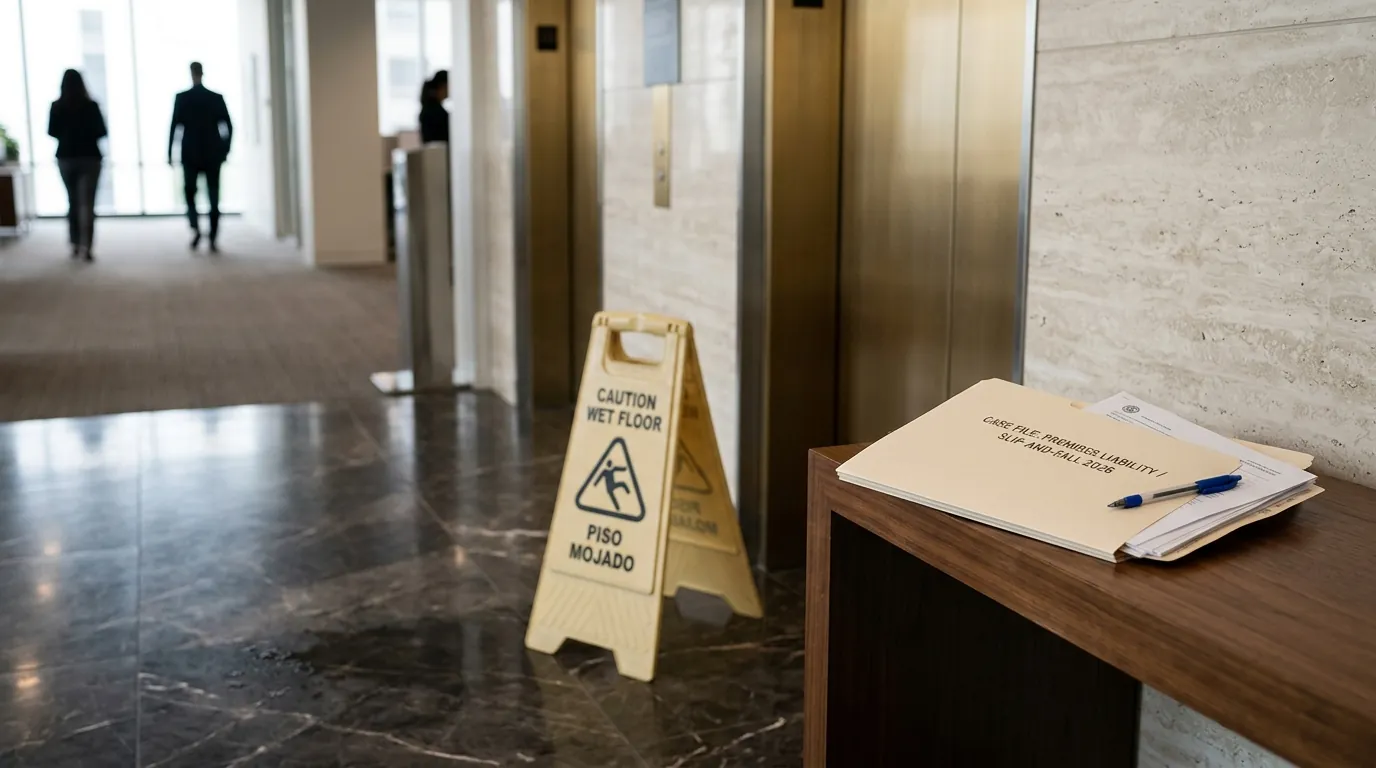
Premises liability refers to a property owner or occupier's duty to keep the property reasonably safe for lawful visitors. Common case types include slip and fall (wet floor, ice, spilled substance), trip and fall (loose carpet, uneven pavement), negligent security (inadequate lighting, no security personnel where crime is foreseeable), dog bites, drownings, and elevator/escalator injuries.
The Three Elements of a Premises Case
- Hazardous condition: Something on the property that posed unreasonable risk (wet floor, damaged pavement, missing handrail, foreseeable crime risk).
- Notice: Actual notice (owner or employee knew) or constructive notice (condition existed long enough that owner should have known).
- Failure to remedy or warn: Owner did not fix the condition or warn visitors about it within a reasonable time.
Notice Is the Biggest Underwriting Concern
The defense argument in almost every premises case is that the owner didn't know about the condition and had no reasonable opportunity to fix it. Strong cases show:
- Surveillance video showing how long the condition existed.
- Employee awareness (co-workers saw the spill; log entries showed reports).
- Prior incidents at the same location.
- Maintenance records showing missed inspections.
- Repetitive complaints from other visitors.
Case Types Fund Differently
| Case type | Fundability |
|---|---|
| Slip/fall at large retailer with video | Strong |
| Trip/fall at large retailer without video | Moderate — notice becomes central |
| Fall at small business or residential | Case-by-case |
| Negligent security (assault at hotel/apartment) | Strong if prior incidents exist |
| Dog bite with prior aggression documented | Strong |
| Drowning at hotel/apartment pool | Strong if lifeguard duty existed and was breached |
Comparative Fault Exposure
Premises cases carry higher comparative fault exposure than most personal injury cases — defense argues the plaintiff should have noticed the hazard. Funders in modified comparative fault states (50%/51% bar) scrutinize this closely. In pure comparative fault states, cases with comparative fault are still fundable but priced accordingly.
Damages Considerations
Premises cases produce a wide damage range. Simple slip and falls with soft-tissue injuries produce $10K–$50K case values. Fractures and surgical injuries produce $50K–$200K. Catastrophic injuries (TBI from a fall, drowning survivor with anoxic brain injury) can reach seven figures.
The Bottom Line
Premises liability cases fund when notice is documented and injuries are severe enough to support meaningful case value. Consult an attorney experienced in premises cases in your jurisdiction. Pre-settlement funding is available for filed cases with credible notice evidence.
At Instabridge Funding, we work with plaintiff attorneys across all fifty states — attorney-founded, non-recourse, and transparently priced. If your case is filed and you would like a fair pre-settlement offer, apply through our portal and your attorney will hear back within one business day.
Frequently asked questions
A property owner or occupier's duty to keep property reasonably safe for lawful visitors. Includes slip/fall, trip/fall, dog bites, drownings, negligent security, and other property-related injuries.
Actual notice (owner knew) or constructive notice (condition existed long enough that owner should have known). Establishing notice is often the case's biggest challenge.
Yes, if the case is filed, notice is documented (or arguable from circumstances), and injuries are medically documented.
Case value depends on other notice evidence — witness statements, prior complaints, maintenance records. Video is the strongest but not the only proof.
State comparative fault rules apply. Pure comparative fault states (CA, NY, AZ) reduce recovery proportionally. Modified states (OH, IL, GA) bar recovery over 50%/51%. See our state guides.
Property owner failed to take reasonable security measures where crime was foreseeable — hotels, apartments, parking garages with history of prior incidents.
Yes, typically. Many states have strict liability statutes for dog bites; others require negligence proof. Prior aggression documentation strengthens both.
18–30 months typical. Simple cases may resolve pre-suit in 6–12 months.