Show table of contents · 29 sections▾
- Can You Be Denied Pre-Settlement Funding? 9 Common Reasons (And What You Can Do)
- How Pre-Settlement Funding Approval Works
- 1. Liability Is Unclear
- What You Can Do
- 2. There Is Little or No Insurance Coverage
- What You Can Do
- 3. Your Injuries Are Minor
- What You Can Do
- 4. The Case Is Too Early
- What You Can Do
- 5. You Don't Have an Attorney
- What You Can Do
- 6. There Are Significant Questions About the Case
- 7. Existing Liens or Prior Funding Reduce Available Recovery
- What You Can Do
- 8. Your Attorney Does Not Recommend Funding
- 9. The Estimated Settlement Does Not Support Funding
- Can You Reapply Later?
- Tips to Improve Your Chances of Approval
- Frequently Asked Questions
- Will bad credit prevent me from qualifying?
- Can I apply without a job?
- Can I be approved if liability is disputed?
- Can I apply again after being denied?
- Does being denied affect my lawsuit?
- Is there a minimum settlement amount required?
- How long does the approval process usually take?
- Can I qualify if my case has not settled yet?
- The Bottom Line
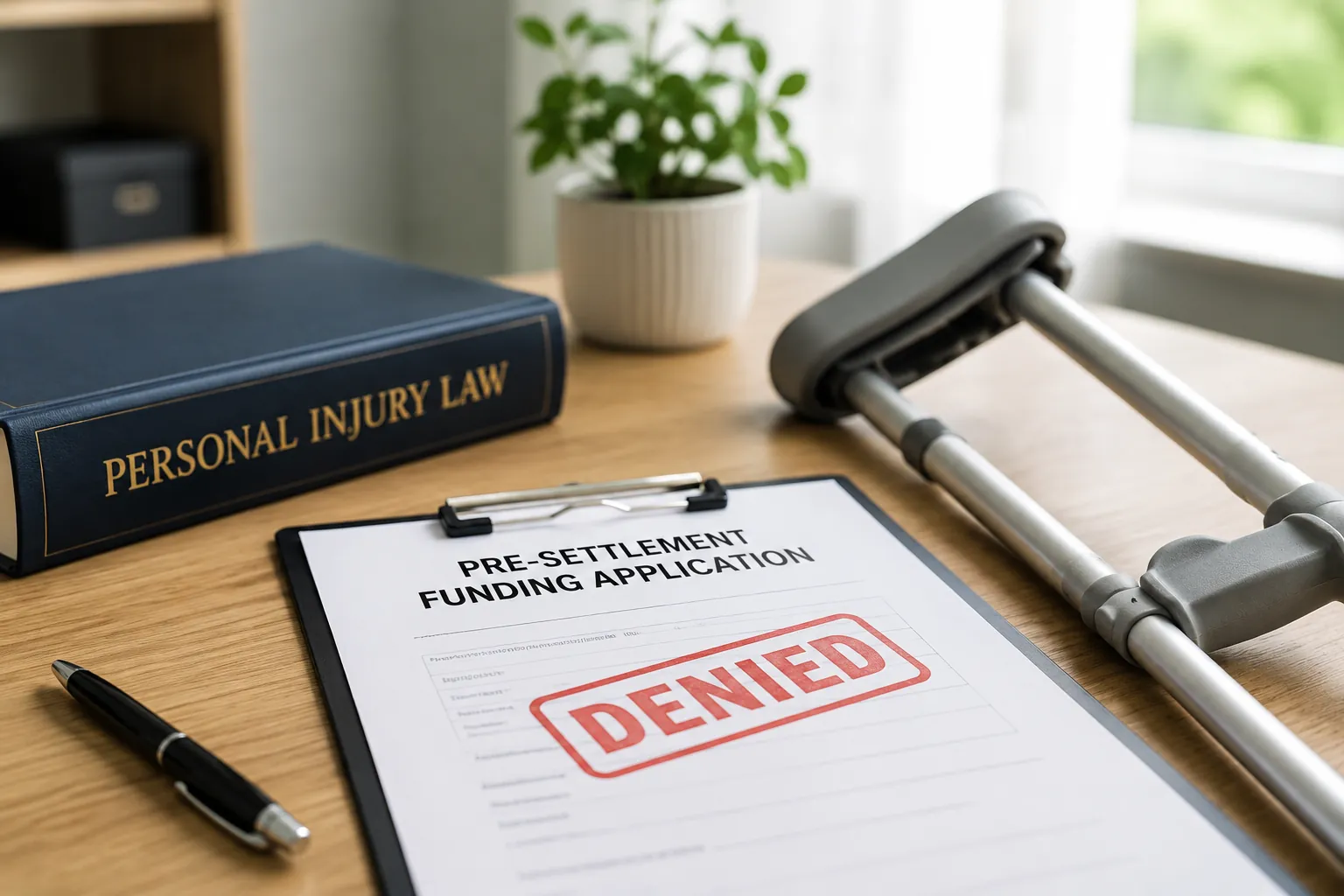
Can You Be Denied Pre-Settlement Funding? 9 Common Reasons (And What You Can Do)
If you've been injured in an accident and are struggling to pay bills while your case is pending, pre-settlement funding can provide much-needed financial relief. However, not every application is approved.
The good news is that being denied doesn't always mean you'll never qualify. In many cases, the issue can be resolved once additional information becomes available or your legal case progresses.
Understanding why applications are declined can help you better prepare before applying.
How Pre-Settlement Funding Approval Works
Unlike a traditional loan, pre-settlement funding is based primarily on the strength and expected value of your legal claim—not your credit score, employment history, or income.
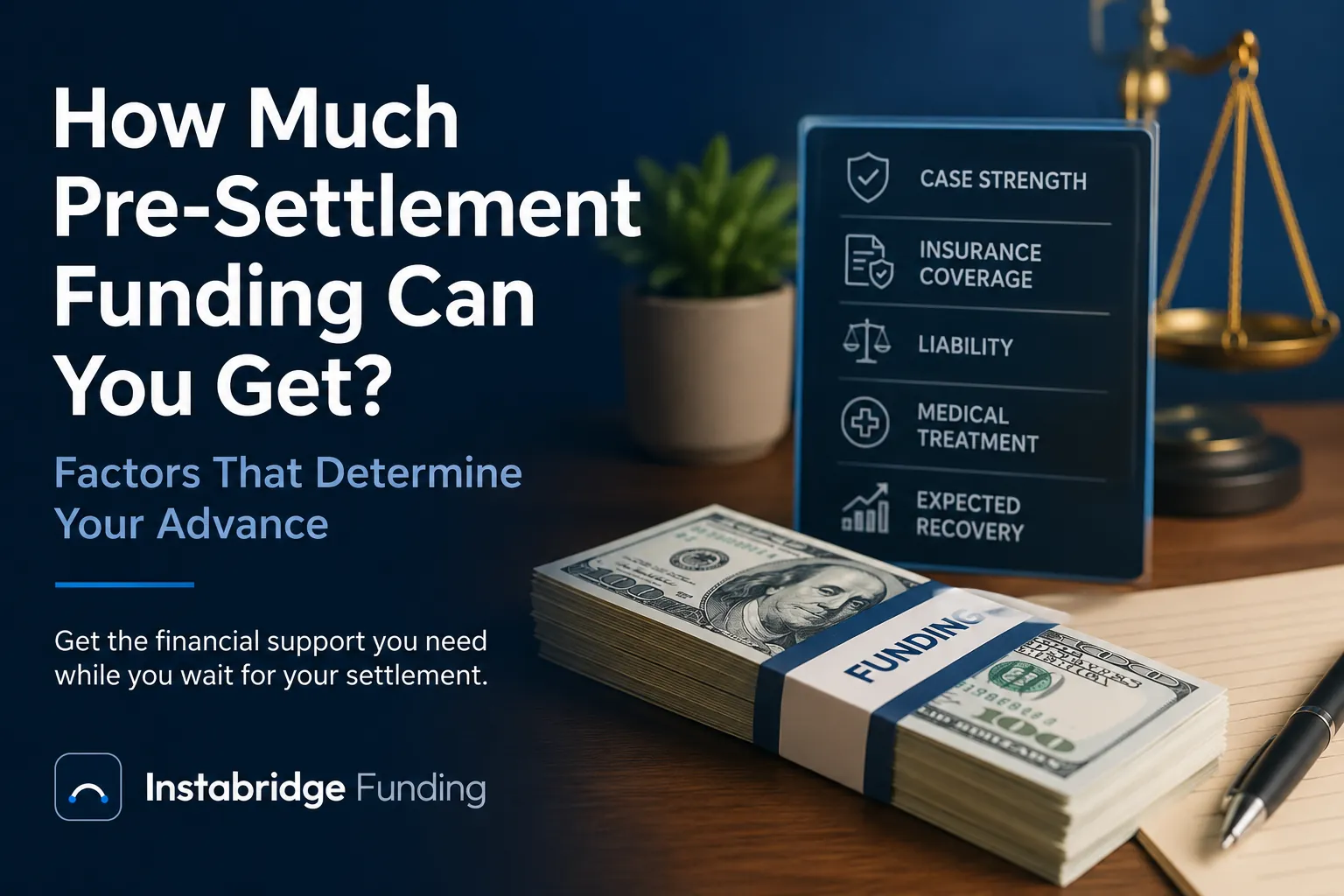
Underwriters typically evaluate:
The facts of the accident
Liability (who was at fault)
Insurance coverage
The severity of your injuries
Medical treatment
Whether you have legal representation
The estimated value of the claim
Potential risks that could affect recovery
The stronger the case, the more likely funding may be approved.
1. Liability Is Unclear
One of the biggest reasons applications are denied is uncertainty about who caused the accident.
If liability is heavily disputed or there is little evidence establishing fault, the risk to the funding company increases.
What You Can Do
Continue gathering evidence through your attorney, including:
Police reports
Witness statements
Photos or videos
Medical documentation
Insurance investigations
As liability becomes clearer, your application may become stronger.
2. There Is Little or No Insurance Coverage
Pre-settlement funding depends on there being a realistic source of recovery.
If the at-fault party has little or no insurance coverage—and no significant assets—the case may not support funding.
What You Can Do
Your attorney may investigate:
Additional insurance policies
Umbrella coverage
Commercial insurance
Uninsured or underinsured motorist coverage
3. Your Injuries Are Minor
Cases involving minor injuries generally have lower settlement values.
If expected damages are relatively small, funding may not be available after considering attorney fees, medical liens, and litigation costs.
What You Can Do
Continue following your treatment plan and ensure all injuries are properly documented.
Never exaggerate your injuries, but make sure your medical records accurately reflect your condition.
4. The Case Is Too Early
Sometimes an application is submitted before enough information is available.
For example:
Medical treatment has just begun.
Insurance has not accepted liability.
Records have not been obtained.
Damages are still unknown.
What You Can Do
As your case develops, additional documentation often becomes available that can strengthen a future application.
5. You Don't Have an Attorney
Most pre-settlement funding companies require applicants to be represented by an attorney.
That's because your lawyer provides important documentation and protects the legal claim throughout the process.
What You Can Do
If you have not yet hired an attorney, consider speaking with an experienced personal injury lawyer before applying.
6. There Are Significant Questions About the Case
Certain legal issues may create uncertainty, including:
Comparative negligence
Liability disputes
Coverage disputes
Questions about damages
Conflicting evidence
These issues don't automatically prevent funding, but they may affect the underwriting decision.
7. Existing Liens or Prior Funding Reduce Available Recovery
Medical liens, prior funding agreements, or other obligations may reduce the amount ultimately available to you.
If very little recovery remains after these obligations are paid, additional funding may not be approved.
What You Can Do
Your attorney and funding company can often review the expected distribution to determine whether additional funding is appropriate.
8. Your Attorney Does Not Recommend Funding
Some funding companies rely heavily on the cooperation and input of your attorney.
If your attorney believes funding is not appropriate for your situation or declines to participate in the process, approval may not be possible.
9. The Estimated Settlement Does Not Support Funding
Ultimately, every funding decision comes down to risk.
If the estimated settlement is unlikely to cover:
Attorney fees
Medical expenses
Existing liens
Litigation costs
Requested funding
there may simply not be enough value remaining to justify approval.
Can You Reapply Later?
Yes.
Many applicants who are initially declined later qualify for funding.
As your case progresses, factors that may improve your chances include:
Additional medical treatment
Insurance accepting liability
New evidence
Higher settlement offers
Improved documentation
A denial today does not necessarily mean a denial forever.
Tips to Improve Your Chances of Approval
Before applying, consider these steps:
Hire an experienced personal injury attorney.
Follow all recommended medical treatment.
Keep your attorney informed about new developments.
Provide requested documents promptly.
Apply only for the amount you truly need.
Be honest throughout the application process.
Strong documentation often leads to faster underwriting decisions.
Frequently Asked Questions
Will bad credit prevent me from qualifying?
Generally, no. Most pre-settlement funding decisions are based on the strength of your legal claim rather than your credit score.
Can I apply without a job?
Yes. Employment status is generally not the primary factor in approval.
Can I be approved if liability is disputed?
Possibly. It depends on the specific facts of your case and the available evidence.
Can I apply again after being denied?
Yes. Many applicants qualify later after their case progresses.
Does being denied affect my lawsuit?
No. A funding denial does not affect your legal rights or the outcome of your case.
Is there a minimum settlement amount required?
Every funding company has different underwriting guidelines, but the expected recovery generally needs to support the requested advance after accounting for fees, liens, and other obligations.
How long does the approval process usually take?
Many applications can be reviewed quickly once the necessary documentation is received from your attorney, although complex cases may take longer.
Can I qualify if my case has not settled yet?
Yes. Pre-settlement funding is specifically designed for pending personal injury claims.
The Bottom Line
Being denied pre-settlement funding can be disappointing, but it doesn't necessarily mean your case lacks merit. Many denials occur because there is not yet enough information, liability remains uncertain, or the case is still in its early stages.
As your claim develops, additional evidence, medical treatment, and insurance decisions may strengthen your application. Working closely with your attorney and choosing an experienced funding company can help improve your chances of approval.
At Instabridge, every application is evaluated individually, with decisions based on the unique facts of your case—not your credit score or employment history. If you're unsure whether you qualify, our team can review your case and explain your options.