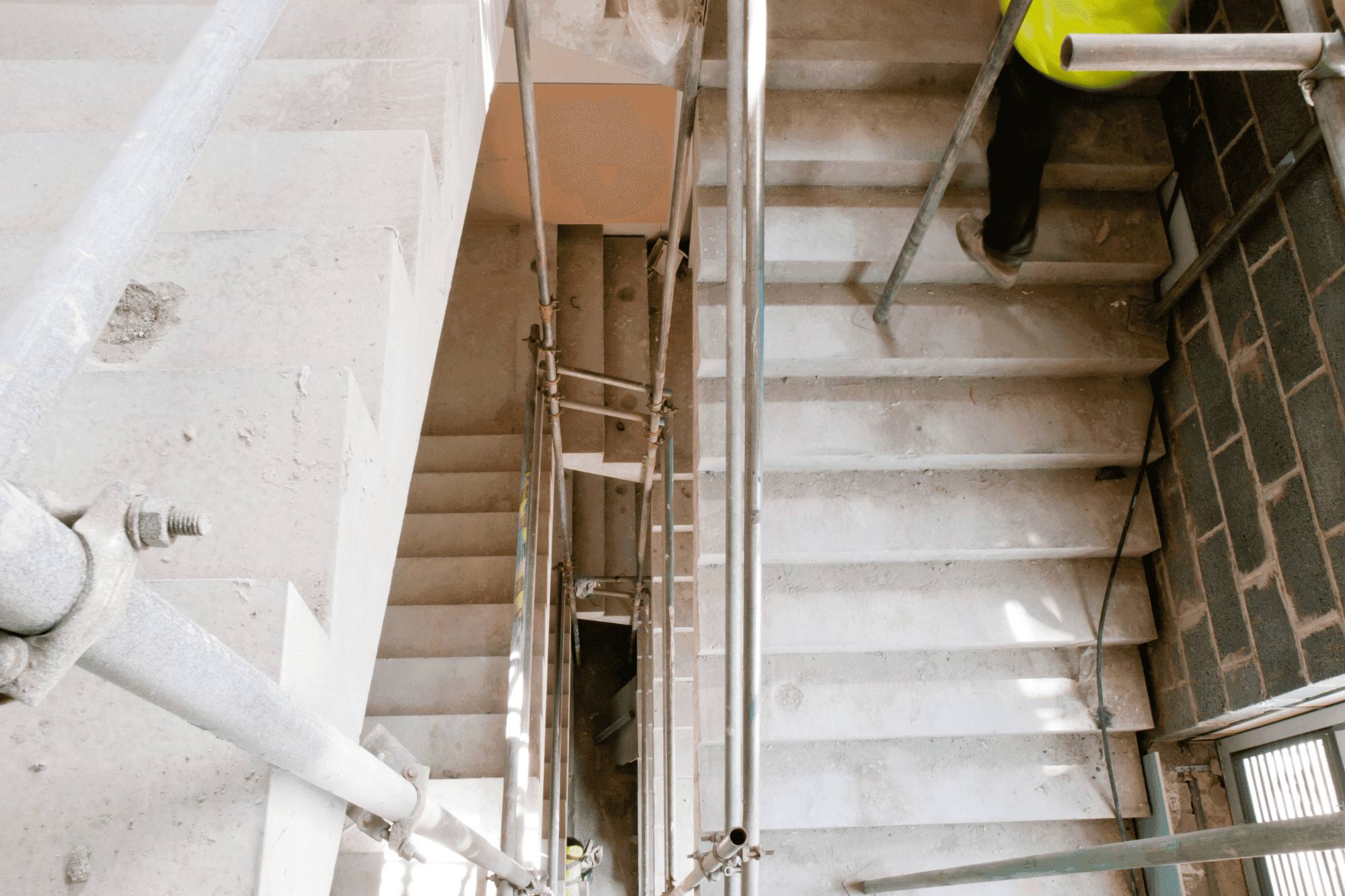
Falls caused by unsafe stairways, elevated walkways, balconies, or mezzanines are among the most common and serious premises liability incidents. These injuries frequently result in significant harm including fractures, spinal injuries, and traumatic brain injuries. When a fall occurs due to a structural defect, inadequate maintenance, or the absence of required safety features, a viable premises liability claim may exist against the property owner or operator.
For plaintiffs injured on unsafe stairways or elevated walkways, understanding how these cases are evaluated and how they affect pre-settlement funding eligibility is important. The involvement of a structural defect or building code violation does not automatically resolve the liability question, but it can significantly strengthen the underlying claim.
Why Stairway and Elevated Walkway Cases Arise
Injuries on stairways and elevated walkways arise from a wide range of hazardous conditions. Common causes in personal injury litigation include:
Missing, broken, or unstable handrails or guardrails
Uneven, cracked, or excessively worn stair surfaces
Inadequate lighting in stairwells or along elevated pathways
Slippery surfaces caused by the absence of appropriate non-slip materials
Structural defects in balcony or mezzanine flooring
Stair dimensions that do not comply with applicable building codes
Debris or obstructions left on stairways by property owners or tenants
Each hazard raises specific questions about what the property owner knew, whether building code requirements were met, and whether reasonable maintenance was performed.
How Building Codes Support Liability Arguments
Building codes and safety regulations establish minimum standards for stairway and elevated walkway construction and maintenance. When a property fails to meet these standards, a negligence per se argument may be available. This means that:
Violation of a building code or safety regulation may establish that the defendant breached the applicable standard of care
The plaintiff must still demonstrate that the code violation caused the injury
Expert testimony from a structural engineer or building code specialist may be used to document the violation and its relationship to the fall
Prior inspection records or code violation notices can strengthen the argument that the defendant had notice of the hazard
Building code violations do not automatically establish liability but can be powerful supporting evidence in a premises liability claim.
How Notice Affects Stairway and Walkway Claims
As with all premises liability cases, establishing that the property owner had notice of the hazardous condition is often central to the claim. Evidence of notice may include:
Prior complaints from tenants or visitors about the condition of the stairway
Maintenance records showing that repairs were requested but not completed
Prior incidents or falls at the same location documented in incident reports
Building inspection records identifying the hazardous condition
Evidence that the defect had existed for a sufficient period that the owner should have discovered it through reasonable inspection
Gathering this evidence early in the litigation process is essential to preserving the claim.
How Stairway and Walkway Cases Affect Case Evaluation
Funding providers assess stairway and elevated walkway injury cases based on the strength of the liability and injury evidence. Considerations include:
Whether the hazardous condition has been documented through photographs, expert inspection, or prior complaints
Whether building code violations or prior notice support the liability argument
The severity and permanency of the plaintiff's injuries
Insurance coverage available from the property owner or operator
The attorney's assessment of liability and realistic case value
Cases where the hazardous condition is well-documented, prior notice is established, and injuries are significant are generally evaluated more favorably.
Can Plaintiffs Still Qualify for Funding?
Yes. Cases involving injuries on unsafe stairways or elevated walkways may still qualify for pre-settlement funding. Approval depends on:
Medical documentation of the injury and its severity
Evidence of the hazardous condition and the property owner's responsibility for it
Identification of a viable defendant with available insurance coverage
Attorney's assessment of liability and case value
Stage of litigation
Funding providers evaluate the overall strength of the claim rather than the specific nature of the structural defect. Attorney input on notice evidence and the liability argument is essential.
How Stairway and Walkway Cases Can Affect Timeline
Premises liability cases involving structural defects may involve additional investigation and expert analysis that extends the litigation timeline. Factors that can contribute include:
Inspection of the stairway or walkway before repairs are made by the property owner
Retention of a structural engineer or building code expert
Discovery of maintenance records, inspection reports, and prior complaint documentation
Disputes over whether the defect caused the fall or whether the plaintiff contributed to the accident
Defense challenges to the severity or permanency of the injuries
Pre-settlement funding can provide financial stability during this investigation and litigation process.
Responsible Funding Evaluation
When a case involves a stairway or elevated walkway injury, funding providers assess the liability evidence and available recovery carefully. Evaluation may consider:
Clarity of the hazardous condition and the defendant's notice of it
Strength of building code or safety regulation evidence supporting the liability argument
Insurance coverage available from the property owner or operator
Medical documentation and injury severity
Attorney's overall assessment of realistic recovery
Advances are structured to reflect the level of certainty present in the liability and notice analysis. Non-recourse protection ensures repayment occurs only if recovery is obtained.
The Importance of Attorney Coordination
Attorney coordination is essential in stairway and elevated walkway cases where preserving evidence of the hazardous condition is time-sensitive. Legal counsel can explain:
What steps are being taken to document and preserve evidence of the defect
Whether building code violations or prior notice support the liability argument
What expert testimony will be used to establish the standard of care
The expected timeline for completing investigation and discovery
Funding providers rely on this professional analysis to evaluate cases where the strength of the claim depends on timely evidence preservation and a well-developed notice argument.
Why Plaintiffs Choose Instabridge
Instabridge understands that stairway and elevated walkway injuries can result in serious and life-altering harm and that the liability analysis in these cases depends on careful evidence gathering and expert support. Our team works directly with attorneys to assess each case based on the available liability evidence and realistic recovery potential. We provide:
Clear written payoff disclosures
Flat-rate pricing without compounding fees
Non-recourse funding protection
Responsible advance limits
Transparent communication throughout the review process
Our goal is to provide financial support while your case progresses toward resolution regardless of the specific structural defect involved.
Conclusion: Funding Support After a Fall on an Unsafe Stairway or Elevated Walkway
Falls caused by unsafe stairways or elevated walkways can give rise to strong premises liability claims when the hazardous condition is documented, notice is established, and injuries are significant. Building code violations and prior complaint records can strengthen these claims considerably. If you were injured in a fall on an unsafe stairway or elevated walkway and need financial support while your case is pending, contact Instabridge. Our team will review your case carefully, coordinate with your attorney, and help you determine whether pre-settlement funding is an appropriate option.