Show table of contents · 9 sections▾
- What Is Insurance Bad Faith?
- Why Bad Faith Cases Take Longer to Resolve
- The Financial Pressure Plaintiffs Face
- How Pre-Settlement Funding Helps in Bad Faith Litigation
- Common Uses of Funding in Bad Faith Cases
- Why Funding Strengthens Bad Faith Claims
- Special Considerations in Bad Faith Funding
- Why Plaintiffs Trust Instabridge in Bad Faith Cases
- Conclusion: Financial Stability While Challenging Insurer Misconduct
Insurance policies are meant to provide protection when something goes wrong. Yet in many cases, insurers delay, deny, or undervalue legitimate claims—placing financial strain on injured plaintiffs when they are most vulnerable. When an insurer’s conduct crosses legal lines, plaintiffs may pursue insurance bad faith litigation.
Bad faith cases are often complex, hard-fought, and time-consuming. During this prolonged process, pre-settlement funding can provide essential financial stability, allowing plaintiffs and their attorneys to pursue accountability without being forced into unfair compromises.
What Is Insurance Bad Faith?
Insurance bad faith occurs when an insurer fails to handle a claim fairly, honestly, and in good faith. This may include:
Unreasonable delays in claim processing
Wrongful denial of valid claims
Lowball settlement offers without justification
Failure to investigate properly
Misrepresenting policy terms
Ignoring evidence supporting coverage
Refusing to defend or indemnify when required
Bad faith claims may arise in auto accidents, personal injury cases, property damage claims, uninsured/underinsured motorist disputes, and more.
Why Bad Faith Cases Take Longer to Resolve
Insurance bad faith litigation is rarely straightforward. These cases often involve:
Detailed review of policy language
Extensive discovery of insurer internal practices
Depositions of claims adjusters and supervisors
Expert testimony on industry standards
Motions challenging insurer conduct
Aggressive defense strategies
Insurers fight these cases hard because bad faith findings can expose them to damages beyond the original policy limits.
The Financial Pressure Plaintiffs Face
While litigation unfolds, plaintiffs often deal with:
Ongoing medical expenses
Lost income or reduced earning capacity
Property damage or unreimbursed losses
Mounting household bills
Delays in receiving benefits that should have been paid
Ironically, the very conduct that leads to a bad faith claim often causes the financial distress that pressures plaintiffs to settle early.
How Pre-Settlement Funding Helps in Bad Faith Litigation
Pre-settlement funding provides a non-recourse cash advance based on the anticipated outcome of the case. This means:
You receive funds before the case resolves
Repayment occurs only if the case wins or settles
There are no monthly payments
If the case is unsuccessful, nothing is owed
Funding helps plaintiffs remain financially stable while challenging improper insurer behavior.
Common Uses of Funding in Bad Faith Cases
Plaintiffs involved in bad faith litigation often use funding to cover:
Rent or mortgage payments
Utilities and household expenses
Medical treatment and co-pays
Transportation and daily living costs
Lost income due to delayed benefits
Legal-related living expenses during litigation
Funding removes the urgency that insurers rely on to force discounted settlements.
Why Funding Strengthens Bad Faith Claims
Financial stability allows plaintiffs to:
Resist low settlement offers tied to policy limits
Allow attorneys time to uncover internal insurer misconduct
Pursue full damages available under bad faith statutes
Avoid accepting unfair compromises just to survive financially
Without funding, insurers often hold the leverage. Funding helps restore balance.
Special Considerations in Bad Faith Funding
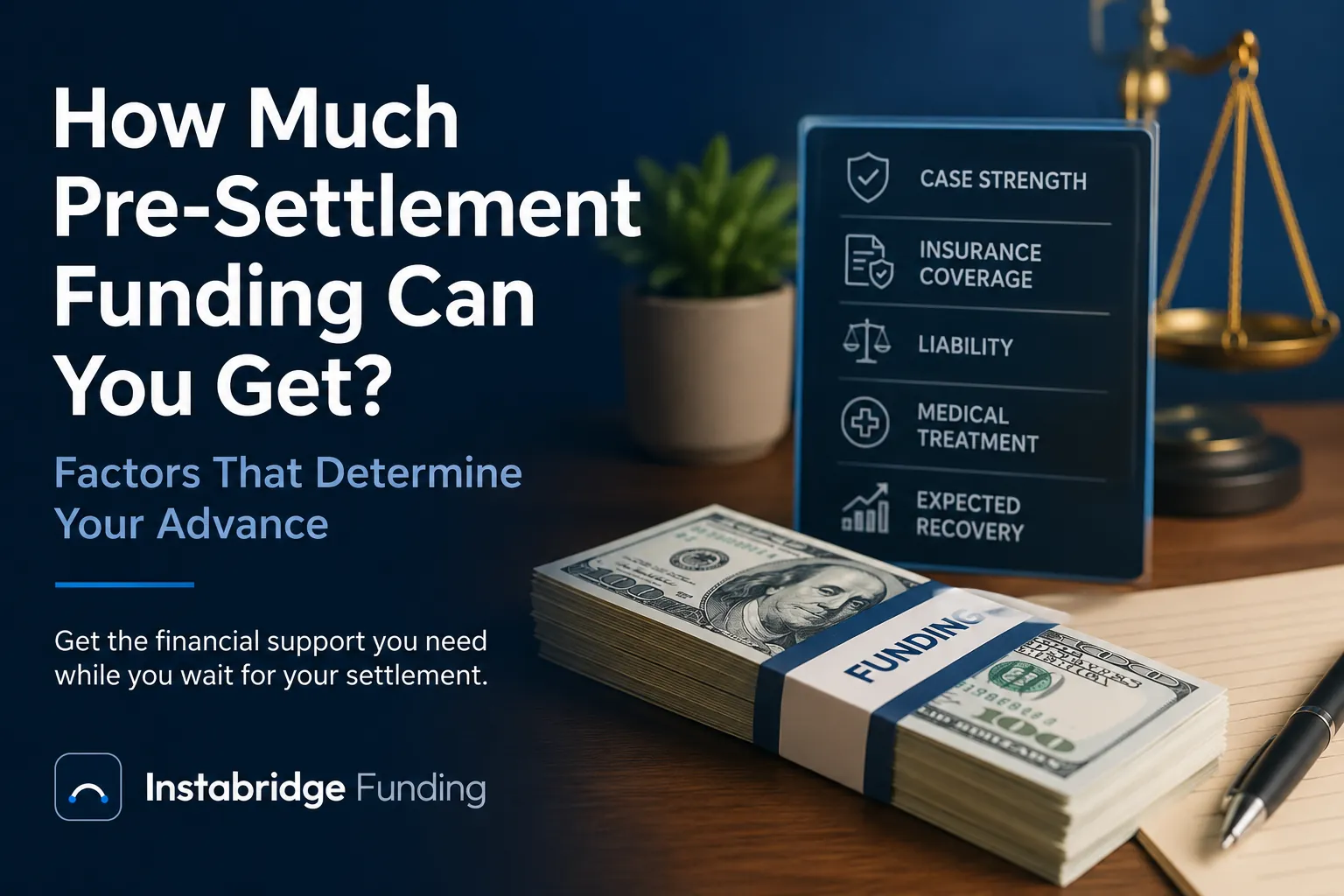
Because bad faith cases may involve layered damages, funding providers evaluate:
The underlying claim value
Policy limits and coverage disputes
Strength of evidence showing bad faith conduct
Attorney assessment of recoverability
Potential statutory or punitive damages
Responsible funding ensures advances align with realistic recovery expectations.
Why Plaintiffs Trust Instabridge in Bad Faith Cases
Instabridge understands the complexity of insurance bad faith litigation. We offer:
Case-specific evaluations
Transparent, flat-rate pricing with no compounding interest
Non-recourse funding protection
Attorney coordination throughout the case
Responsible funding limits to protect final recovery
We support plaintiffs while insurers are held accountable.
Conclusion: Financial Stability While Challenging Insurer Misconduct
Insurance bad faith litigation is about fairness, accountability, and enforcing the promises insurers make to policyholders. Pre-settlement funding from Instabridge helps plaintiffs stay financially secure while pursuing justice—without giving insurers the leverage they seek through delay and denial.
If you’re involved in an insurance bad faith case and facing financial pressure during prolonged litigation, contact Instabridge today. We’ll help you bridge the gap responsibly while your case moves forward.