Show table of contents · 10 sections▾
- How Social Media Becomes Evidence in Injury Cases
- Why Social Media Matters to Funding Evaluations
- Does Social Media Automatically Prevent Funding?
- Best Practices for Plaintiffs During Litigation
- The Role of Attorney Coordination
- Transparency and Responsible Funding Decisions
- How Social Media Can Affect Settlement Timing
- Protecting Your Case While Seeking Funding
- Why Plaintiffs Choose Instabridge
- Conclusion: Informed Decisions in the Digital Age
Social media has become a routine part of modern litigation. Photos, comments, location tags, and even private messages can appear in personal injury cases and influence how claims are evaluated.
For plaintiffs considering pre-settlement funding, it is important to understand how social media activity may affect both the legal process and funding decisions. Responsible funding providers review the overall strength of a case, and online evidence can play a role in that assessment.
Understanding this connection helps plaintiffs protect their claim and make informed financial decisions.
How Social Media Becomes Evidence in Injury Cases
Defense attorneys frequently review a plaintiff’s online presence during litigation. Posts that appear inconsistent with claimed injuries can be used to challenge credibility or reduce settlement value.
Common examples include:
Photos showing physical activity after an alleged injury
Comments about travel, recreation, or work activities
Location check-ins that conflict with medical restrictions
Public discussions about the lawsuit
Even posts shared by friends or family can become relevant if they are publicly accessible.
Courts generally allow relevant social media content to be introduced as evidence, particularly if it contradicts medical records or sworn testimony.
Why Social Media Matters to Funding Evaluations
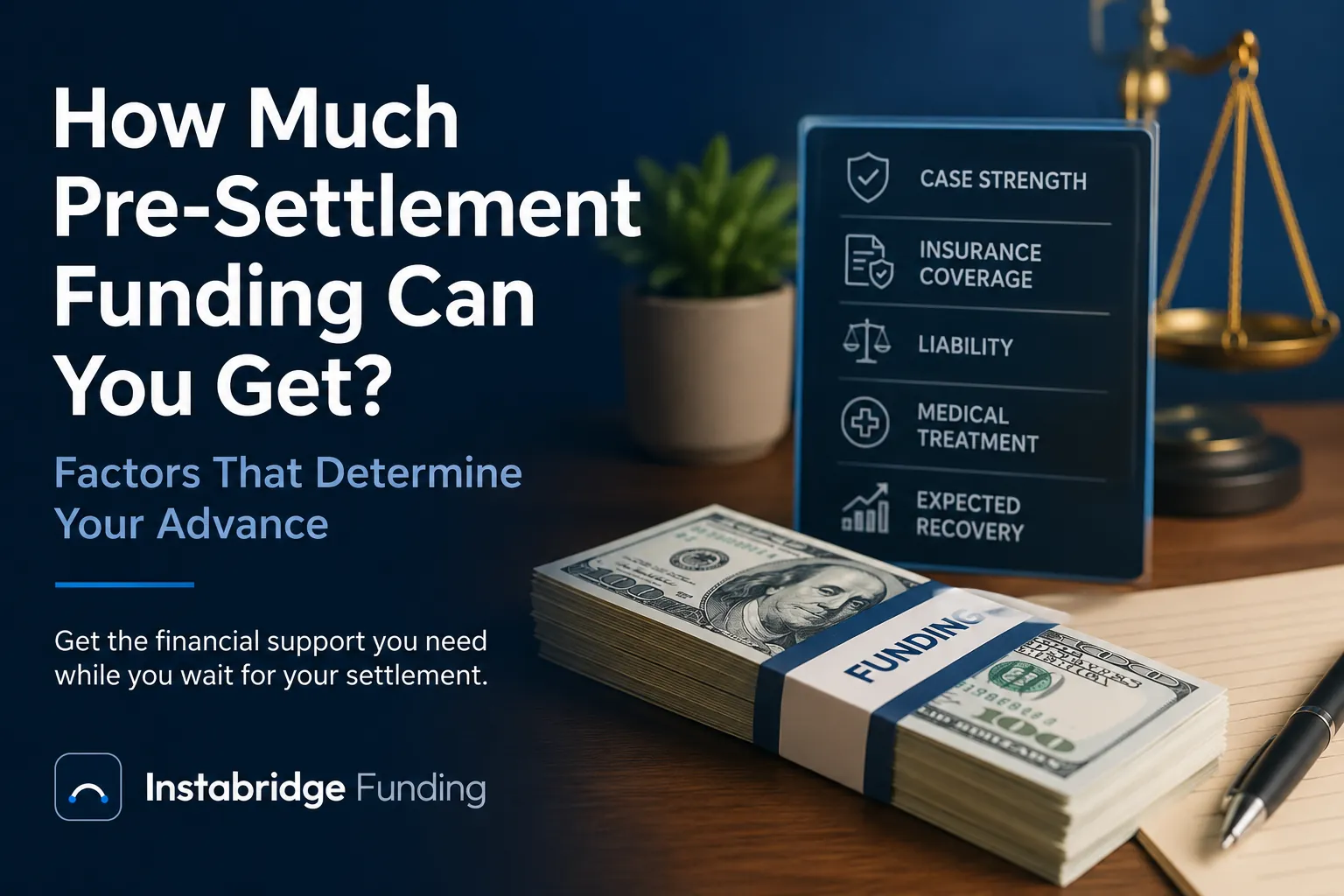
Pre-settlement funding is based primarily on case strength and projected settlement value. When evaluating an application, funding providers consider:
Liability clarity
Severity of injuries
Consistency of medical treatment
Insurance coverage
Defense risk factors
Social media evidence can affect how insurers negotiate. If the defense identifies content that appears to undermine injury claims, settlement negotiations may become more complicated or prolonged.
Funding providers work closely with attorneys to assess these risks. The goal is not to judge a plaintiff’s online activity, but to understand how it may influence the outcome of the case.
Does Social Media Automatically Prevent Funding?
No. The presence of social media evidence does not automatically disqualify a plaintiff from receiving pre-settlement funding.
What matters is context.
For example:
A photo taken before the injury may be misinterpreted if posted later.
Limited activity may not contradict medical limitations.
Minor inconsistencies may not significantly affect settlement value.
Attorneys are skilled at addressing these issues through clarification, medical documentation, and legal argument.
Funding companies rely on attorney insight when evaluating potential impact. Coordination ensures that decisions are based on accurate information rather than assumptions.
Best Practices for Plaintiffs During Litigation
While every case is unique, most attorneys advise plaintiffs to use caution online while a claim is pending.
General recommendations often include:
Avoid posting about the accident or lawsuit
Limit public visibility of accounts
Refrain from sharing physical activity images
Ask friends and family not to tag or post about you
Discuss any concerns with your attorney
This is not about hiding information. It is about preventing misunderstandings that may be taken out of context.
Careful online behavior protects both your legal position and the potential value of your claim.
The Role of Attorney Coordination
Pre-settlement funding should always involve direct communication with your attorney. In cases where social media evidence exists, attorney coordination becomes even more important.
Your attorney can:
Explain whether the content has legal significance
Clarify how it may influence negotiations
Provide context during funding review
Confirm whether any issues have been resolved
Funding providers do not independently investigate plaintiffs. They rely on case documentation and attorney input to make responsible decisions.
This structured process helps ensure that funding aligns with realistic expectations.
Transparency and Responsible Funding Decisions
Responsible funding providers evaluate risk carefully. When social media evidence introduces uncertainty, funding amounts may be adjusted to reflect projected settlement value.
This protects all parties by:
Avoiding excessive advances
Maintaining fair repayment expectations
Supporting long-term financial stability
Pre-settlement funding is non-recourse, meaning repayment only occurs if the case resolves successfully. However, responsible providers still aim to structure advances conservatively to protect the plaintiff’s net recovery.
Transparency about potential risks — including online evidence — supports better financial planning.
How Social Media Can Affect Settlement Timing
In some cases, disputes over online content can extend litigation. Additional discovery, depositions, or expert review may be required to interpret digital evidence.
This can:
Lengthen settlement timelines
Increase defense scrutiny
Affect negotiation leverage
When litigation slows, plaintiffs may face extended financial pressure. Pre-settlement funding can help bridge that gap by providing access to cash while the legal process continues.
Again, the key is alignment between funding decisions and realistic case expectations.
Protecting Your Case While Seeking Funding
If you are considering pre-settlement funding and have concerns about social media activity, take these steps:
Speak openly with your attorney.
Avoid deleting content without legal guidance.
Follow professional advice regarding account settings.
Provide accurate information during the funding review process.
Honesty and coordination are essential. Attempting to conceal information can create larger problems later.
Funding companies appreciate transparency because it allows them to evaluate cases accurately and responsibly.
Why Plaintiffs Choose Instabridge
Instabridge understands that modern litigation involves digital evidence. We evaluate applications carefully, in coordination with your attorney, to assess real case strength — not isolated online impressions.
We provide:
Clear payoff disclosures
Flat-rate pricing without compounding fees
Non-recourse funding protection
Direct attorney coordination
Responsible advance limits
Our approach prioritizes financial stability during litigation while protecting long-term recovery.
Conclusion: Informed Decisions in the Digital Age
Social media is a normal part of daily life, but it can influence how injury claims are perceived and negotiated. Understanding its role helps plaintiffs protect both their case and their financial position.
Pre-settlement funding remains available even when social media evidence exists, provided the case remains strong and well-documented. The key is transparency, attorney coordination, and responsible financial planning.
If you are navigating a personal injury lawsuit and need financial support during litigation, contact Instabridge. Our team will review your case carefully, explain your options clearly, and help you move forward with confidence.