
GUIDE

Pre-Settlement Funding When a Case Involves Multiple Insurance Policies

Pre-Settlement Funding When a Case Involves Multiple Insurance Policies

Many personal injury claims involve more than one insurance policy. While some cases are resolved through a single liability policy, others may include multiple layers of coverage that apply to the same incident.

For plaintiffs considering pre-settlement funding, understanding how multiple insurance policies affect case evaluation is important. The presence of additional coverage can influence both the projected value of the claim and the timing of settlement negotiations.

Funding providers review these situations carefully in coordination with the plaintiff’s attorney.

When Multiple Policies May Apply

Several scenarios can lead to more than one insurance policy being involved in a personal injury claim. Common examples include:

  • Commercial accidents involving company vehicles

  • Construction site injuries involving contractors and subcontractors

  • Premises liability incidents at leased properties

  • Multi-vehicle collisions

  • Accidents involving employer liability coverage

In these cases, multiple insurers may share responsibility for the same incident.

Identifying all potential coverage sources is a key step in evaluating the case.

Primary and Excess Insurance Coverage

Insurance policies are often structured in layers. A primary policy provides the first level of coverage, while excess or umbrella policies provide additional coverage once the primary limits are exhausted.

For example:

  • A primary auto policy may provide $100,000 in coverage

  • An umbrella policy may provide an additional $1 million

If damages exceed the primary policy limits, excess insurers may become involved in settlement negotiations.

Funding providers consider both primary and excess coverage when estimating potential recovery.

How Multiple Insurers Affect Settlement Negotiations

When several insurers are involved, the negotiation process can become more complex. Each carrier may have its own legal team, claims adjusters, and evaluation procedures.

This can lead to:

  • Disagreements over responsibility between insurers

  • Delays while coverage obligations are determined

  • Multiple settlement conferences or mediations

  • Extended discovery to determine policy applicability

Even when liability appears clear, coordination among insurers can slow the resolution process.

Pre-settlement funding may provide financial support during these delays.

Determining Which Policies Apply

Attorneys typically investigate available coverage early in litigation. This process may involve:

  • Reviewing insurance declarations pages

  • Analyzing contract indemnification provisions

  • Identifying additional insured endorsements

  • Evaluating umbrella policy language

In some cases, insurers initially deny coverage until further investigation clarifies policy obligations.

Funding providers rely on attorney confirmation of coverage details when evaluating funding eligibility.

How Multiple Policies Can Affect Case Value

The presence of multiple insurance policies can sometimes increase the potential recovery available to a plaintiff. When higher policy limits apply, settlement negotiations may reflect the broader coverage landscape.

However, policy limits do not guarantee recovery. Case value still depends on factors such as:

  • Injury severity

  • Medical documentation

  • Liability strength

  • Litigation risks

  • Applicable legal defenses

Funding providers consider all of these factors when estimating projected settlement value.

Can You Still Qualify for Funding?

Yes. Many cases involving multiple insurance policies qualify for pre-settlement funding.

Approval generally depends on:

  • Confirmed coverage availability

  • Liability clarity

  • Medical documentation of injuries

  • Attorney’s settlement evaluation

  • Litigation stage

When multiple policies are involved, providers may consider the combined policy limits when structuring advances.

Responsible evaluation remains essential.

Why Multiple Policies May Extend Case Timelines

Although additional coverage can increase potential recovery, it may also extend the litigation process.

Reasons include:

  • Insurers disputing policy priority

  • Allocation disputes between carriers

  • Additional discovery related to coverage

  • Separate defense counsel involvement

These procedural steps can lengthen the time required to reach settlement.

Financial pressure during extended litigation is one reason plaintiffs explore pre-settlement funding options.

Responsible Advance Structuring

Funding providers structure advances carefully when multiple policies are involved. Evaluation typically considers:

  • Confirmed primary policy limits

  • Potential excess coverage

  • Legal fees and litigation costs

  • Medical liens and reimbursement obligations

  • Estimated net recovery

Responsible structuring helps preserve the plaintiff’s financial outcome at settlement.

Non-recourse protection remains in place, meaning repayment occurs only if the case resolves successfully.

The Importance of Attorney Coordination

Insurance coverage questions can be complex, especially when multiple policies apply. Funding providers rely heavily on attorney guidance to clarify:

  • Which policies apply to the incident

  • Whether coverage disputes exist

  • The likelihood of excess insurer participation

  • The projected settlement range

This coordination ensures that funding decisions reflect the legal realities of the case.

Providers do not independently interpret insurance contracts without counsel.

Why Plaintiffs Choose Instabridge

Instabridge understands that cases involving multiple insurance policies require careful evaluation. Our team works directly with attorneys to assess coverage layers and realistic recovery projections.

We provide:

  • Clear written payoff disclosures

  • Flat-rate pricing without compounding fees

  • Non-recourse funding protection

  • Responsible advance limits

  • Transparent communication throughout the review process

Our goal is to support plaintiffs financially while their legal case progresses.

Conclusion: Understanding Coverage Layers in Personal Injury Cases

When multiple insurance policies apply to a personal injury claim, the potential recovery landscape can expand — but the legal process may also become more complex.

Pre-settlement funding can provide financial stability while coverage questions are resolved and negotiations continue. Responsible evaluation and attorney coordination ensure that advances align with realistic settlement expectations.

If your personal injury case involves multiple insurance policies and you need financial support during litigation, contact Instabridge. Our team will review your case carefully, coordinate with your attorney, and help you determine whether pre-settlement funding is an appropriate option.
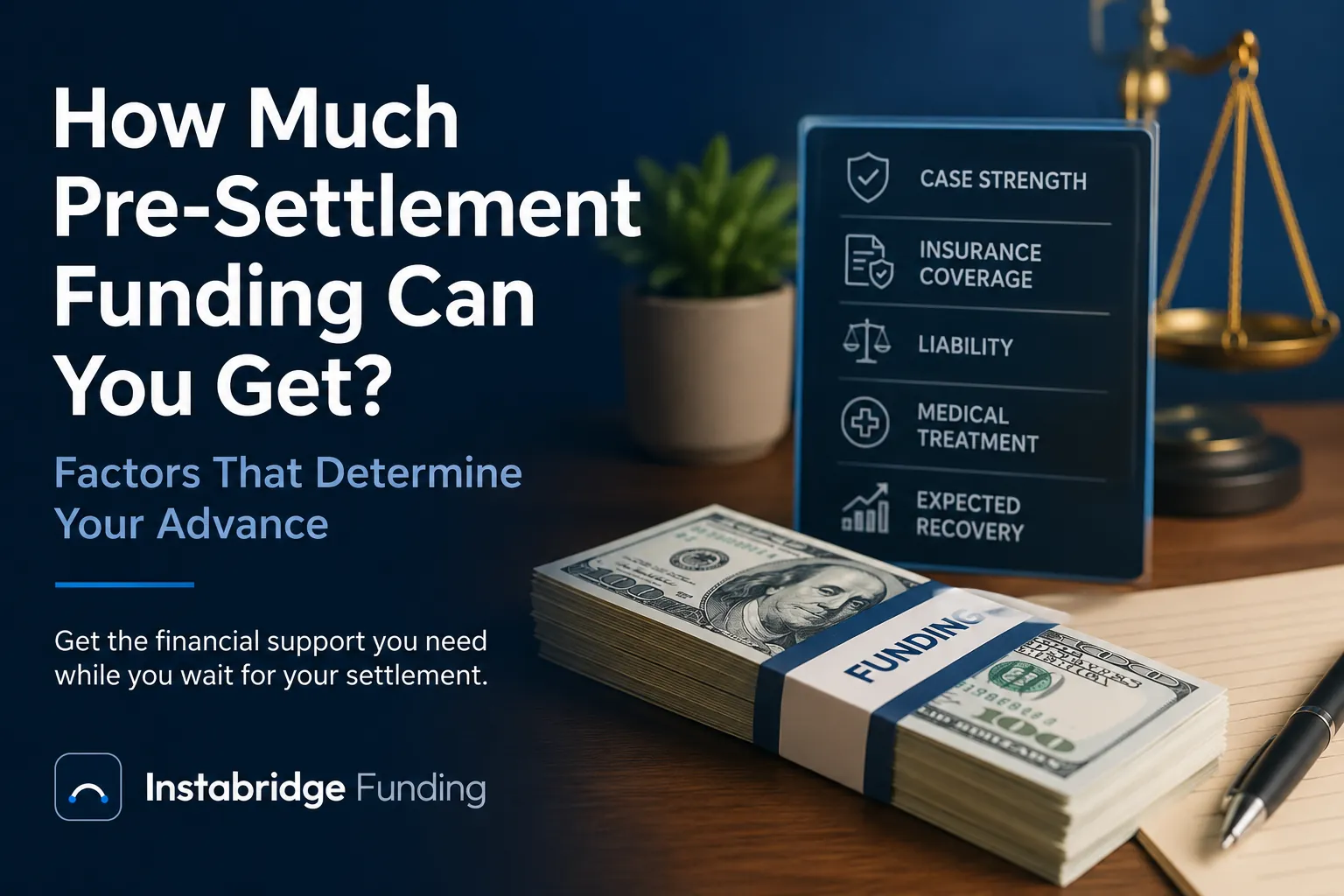
Many personal injury claims involve more than one insurance policy. While some cases are resolved through a single liability policy, others may include multiple layers of coverage that apply to the same incident.

For plaintiffs considering pre-settlement funding, understanding how multiple insurance policies affect case evaluation is important. The presence of additional coverage can influence both the projected value of the claim and the timing of settlement negotiations.

Funding providers review these situations carefully in coordination with the plaintiff’s attorney.

When Multiple Policies May Apply

Several scenarios can lead to more than one insurance policy being involved in a personal injury claim. Common examples include:

  • Commercial accidents involving company vehicles

  • Construction site injuries involving contractors and subcontractors

  • Premises liability incidents at leased properties

  • Multi-vehicle collisions

  • Accidents involving employer liability coverage

In these cases, multiple insurers may share responsibility for the same incident.

Identifying all potential coverage sources is a key step in evaluating the case.

Primary and Excess Insurance Coverage

Insurance policies are often structured in layers. A primary policy provides the first level of coverage, while excess or umbrella policies provide additional coverage once the primary limits are exhausted.

For example:

  • A primary auto policy may provide $100,000 in coverage

  • An umbrella policy may provide an additional $1 million

If damages exceed the primary policy limits, excess insurers may become involved in settlement negotiations.

Funding providers consider both primary and excess coverage when estimating potential recovery.

How Multiple Insurers Affect Settlement Negotiations

When several insurers are involved, the negotiation process can become more complex. Each carrier may have its own legal team, claims adjusters, and evaluation procedures.

This can lead to:

  • Disagreements over responsibility between insurers

  • Delays while coverage obligations are determined

  • Multiple settlement conferences or mediations

  • Extended discovery to determine policy applicability

Even when liability appears clear, coordination among insurers can slow the resolution process.

Pre-settlement funding may provide financial support during these delays.

Determining Which Policies Apply

Attorneys typically investigate available coverage early in litigation. This process may involve:

  • Reviewing insurance declarations pages

  • Analyzing contract indemnification provisions

  • Identifying additional insured endorsements

  • Evaluating umbrella policy language

In some cases, insurers initially deny coverage until further investigation clarifies policy obligations.

Funding providers rely on attorney confirmation of coverage details when evaluating funding eligibility.

How Multiple Policies Can Affect Case Value

The presence of multiple insurance policies can sometimes increase the potential recovery available to a plaintiff. When higher policy limits apply, settlement negotiations may reflect the broader coverage landscape.

However, policy limits do not guarantee recovery. Case value still depends on factors such as:

  • Injury severity

  • Medical documentation

  • Liability strength

  • Litigation risks

  • Applicable legal defenses

Funding providers consider all of these factors when estimating projected settlement value.

Can You Still Qualify for Funding?

Yes. Many cases involving multiple insurance policies qualify for pre-settlement funding.

Approval generally depends on:

  • Confirmed coverage availability

  • Liability clarity

  • Medical documentation of injuries

  • Attorney’s settlement evaluation

  • Litigation stage

When multiple policies are involved, providers may consider the combined policy limits when structuring advances.

Responsible evaluation remains essential.

Why Multiple Policies May Extend Case Timelines

Although additional coverage can increase potential recovery, it may also extend the litigation process.

Reasons include:

  • Insurers disputing policy priority

  • Allocation disputes between carriers

  • Additional discovery related to coverage

  • Separate defense counsel involvement

These procedural steps can lengthen the time required to reach settlement.

Financial pressure during extended litigation is one reason plaintiffs explore pre-settlement funding options.

Responsible Advance Structuring

Funding providers structure advances carefully when multiple policies are involved. Evaluation typically considers:

  • Confirmed primary policy limits

  • Potential excess coverage

  • Legal fees and litigation costs

  • Medical liens and reimbursement obligations

  • Estimated net recovery

Responsible structuring helps preserve the plaintiff’s financial outcome at settlement.

Non-recourse protection remains in place, meaning repayment occurs only if the case resolves successfully.

The Importance of Attorney Coordination

Insurance coverage questions can be complex, especially when multiple policies apply. Funding providers rely heavily on attorney guidance to clarify:

  • Which policies apply to the incident

  • Whether coverage disputes exist

  • The likelihood of excess insurer participation

  • The projected settlement range

This coordination ensures that funding decisions reflect the legal realities of the case.

Providers do not independently interpret insurance contracts without counsel.

Why Plaintiffs Choose Instabridge

Instabridge understands that cases involving multiple insurance policies require careful evaluation. Our team works directly with attorneys to assess coverage layers and realistic recovery projections.

We provide:

  • Clear written payoff disclosures

  • Flat-rate pricing without compounding fees

  • Non-recourse funding protection

  • Responsible advance limits

  • Transparent communication throughout the review process

Our goal is to support plaintiffs financially while their legal case progresses.

Conclusion: Understanding Coverage Layers in Personal Injury Cases

When multiple insurance policies apply to a personal injury claim, the potential recovery landscape can expand — but the legal process may also become more complex.

Pre-settlement funding can provide financial stability while coverage questions are resolved and negotiations continue. Responsible evaluation and attorney coordination ensure that advances align with realistic settlement expectations.

If your personal injury case involves multiple insurance policies and you need financial support during litigation, contact Instabridge. Our team will review your case carefully, coordinate with your attorney, and help you determine whether pre-settlement funding is an appropriate option.

Many personal injury claims involve more than one insurance policy. While some cases are resolved through a single liability policy, others may include multiple layers of coverage that apply to the same incident.

For plaintiffs considering pre-settlement funding, understanding how multiple insurance policies affect case evaluation is important. The presence of additional coverage can influence both the projected value of the claim and the timing of settlement negotiations.

Funding providers review these situations carefully in coordination with the plaintiff’s attorney.

When Multiple Policies May Apply

Several scenarios can lead to more than one insurance policy being involved in a personal injury claim. Common examples include:

  • Commercial accidents involving company vehicles

  • Construction site injuries involving contractors and subcontractors

  • Premises liability incidents at leased properties

  • Multi-vehicle collisions

  • Accidents involving employer liability coverage

In these cases, multiple insurers may share responsibility for the same incident.

Identifying all potential coverage sources is a key step in evaluating the case.

Primary and Excess Insurance Coverage

Insurance policies are often structured in layers. A primary policy provides the first level of coverage, while excess or umbrella policies provide additional coverage once the primary limits are exhausted.

For example:

  • A primary auto policy may provide $100,000 in coverage

  • An umbrella policy may provide an additional $1 million

If damages exceed the primary policy limits, excess insurers may become involved in settlement negotiations.

Funding providers consider both primary and excess coverage when estimating potential recovery.

How Multiple Insurers Affect Settlement Negotiations

When several insurers are involved, the negotiation process can become more complex. Each carrier may have its own legal team, claims adjusters, and evaluation procedures.

This can lead to:

  • Disagreements over responsibility between insurers

  • Delays while coverage obligations are determined

  • Multiple settlement conferences or mediations

  • Extended discovery to determine policy applicability

Even when liability appears clear, coordination among insurers can slow the resolution process.

Pre-settlement funding may provide financial support during these delays.

Determining Which Policies Apply

Attorneys typically investigate available coverage early in litigation. This process may involve:

  • Reviewing insurance declarations pages

  • Analyzing contract indemnification provisions

  • Identifying additional insured endorsements

  • Evaluating umbrella policy language

In some cases, insurers initially deny coverage until further investigation clarifies policy obligations.

Funding providers rely on attorney confirmation of coverage details when evaluating funding eligibility.

How Multiple Policies Can Affect Case Value

The presence of multiple insurance policies can sometimes increase the potential recovery available to a plaintiff. When higher policy limits apply, settlement negotiations may reflect the broader coverage landscape.

However, policy limits do not guarantee recovery. Case value still depends on factors such as:

  • Injury severity

  • Medical documentation

  • Liability strength

  • Litigation risks

  • Applicable legal defenses

Funding providers consider all of these factors when estimating projected settlement value.

Can You Still Qualify for Funding?

Yes. Many cases involving multiple insurance policies qualify for pre-settlement funding.

Approval generally depends on:

  • Confirmed coverage availability

  • Liability clarity

  • Medical documentation of injuries

  • Attorney’s settlement evaluation

  • Litigation stage

When multiple policies are involved, providers may consider the combined policy limits when structuring advances.

Responsible evaluation remains essential.

Why Multiple Policies May Extend Case Timelines

Although additional coverage can increase potential recovery, it may also extend the litigation process.

Reasons include:

  • Insurers disputing policy priority

  • Allocation disputes between carriers

  • Additional discovery related to coverage

  • Separate defense counsel involvement

These procedural steps can lengthen the time required to reach settlement.

Financial pressure during extended litigation is one reason plaintiffs explore pre-settlement funding options.

Responsible Advance Structuring

Funding providers structure advances carefully when multiple policies are involved. Evaluation typically considers:

  • Confirmed primary policy limits

  • Potential excess coverage

  • Legal fees and litigation costs

  • Medical liens and reimbursement obligations

  • Estimated net recovery

Responsible structuring helps preserve the plaintiff’s financial outcome at settlement.

Non-recourse protection remains in place, meaning repayment occurs only if the case resolves successfully.

The Importance of Attorney Coordination

Insurance coverage questions can be complex, especially when multiple policies apply. Funding providers rely heavily on attorney guidance to clarify:

  • Which policies apply to the incident

  • Whether coverage disputes exist

  • The likelihood of excess insurer participation

  • The projected settlement range

This coordination ensures that funding decisions reflect the legal realities of the case.

Providers do not independently interpret insurance contracts without counsel.

Why Plaintiffs Choose Instabridge

Instabridge understands that cases involving multiple insurance policies require careful evaluation. Our team works directly with attorneys to assess coverage layers and realistic recovery projections.

We provide:

  • Clear written payoff disclosures

  • Flat-rate pricing without compounding fees

  • Non-recourse funding protection

  • Responsible advance limits

  • Transparent communication throughout the review process

Our goal is to support plaintiffs financially while their legal case progresses.

Conclusion: Understanding Coverage Layers in Personal Injury Cases

When multiple insurance policies apply to a personal injury claim, the potential recovery landscape can expand — but the legal process may also become more complex.

Pre-settlement funding can provide financial stability while coverage questions are resolved and negotiations continue. Responsible evaluation and attorney coordination ensure that advances align with realistic settlement expectations.

If your personal injury case involves multiple insurance policies and you need financial support during litigation, contact Instabridge. Our team will review your case carefully, coordinate with your attorney, and help you determine whether pre-settlement funding is an appropriate option.
Back to blogs

Other Blogs

Waiting on a Settlement? Get Cash Now!

Instabridge Funding provides fast, risk-free legal funding.

Apply Now

Waiting on a Settlement? Get Cash Now!

Instabridge Funding provides fast, risk-free legal funding.

Apply Now