Show table of contents · 10 sections▾
- What Happens When a Defendant Files for Bankruptcy?
- Insurance Coverage Often Remains Available
- When Recovery Becomes More Complex
- Can You Still Qualify for Pre-Settlement Funding?
- How Bankruptcy Affects Settlement Timing
- The Importance of Attorney Coordination
- Non-Recourse Protection in Bankruptcy Cases
- Evaluating Risk Carefully
- Why Plaintiffs Choose Instabridge
- Conclusion: Navigating Recovery After Bankruptcy
In some personal injury cases, the defendant files for bankruptcy while litigation is pending. This development can introduce uncertainty and delay, leaving plaintiffs unsure about how their claim will proceed.
If you are considering pre-settlement funding and the defendant has filed for bankruptcy protection, it is important to understand how that process affects both your lawsuit and funding eligibility.
Bankruptcy does not automatically eliminate your claim. However, it changes how recovery may occur.
What Happens When a Defendant Files for Bankruptcy?
When a defendant files for bankruptcy, an automatic stay typically goes into effect. This stay temporarily pauses most collection efforts and litigation against the debtor.
Depending on the bankruptcy chapter filed, the case may involve:
Liquidation of assets (Chapter 7)
Reorganization and repayment plans (Chapter 11 or Chapter 13)
In personal injury cases, courts often allow claims to proceed for the limited purpose of accessing available insurance coverage.
Your attorney will petition the bankruptcy court if necessary to continue litigation.
Insurance Coverage Often Remains Available
One critical point many plaintiffs do not realize is that bankruptcy does not automatically eliminate insurance coverage.
If the defendant carried liability insurance at the time of the incident:
The insurer may still be responsible for paying valid claims
Litigation may proceed to determine liability and damages
Recovery may come from insurance rather than personal assets
In these cases, the practical recovery source remains intact despite the bankruptcy filing.
Funding providers focus heavily on available insurance coverage when evaluating such claims.
When Recovery Becomes More Complex
If insurance coverage is limited or unavailable, recovery may depend on the defendant’s bankruptcy estate.
This can introduce additional challenges:
Competing creditor claims
Court-supervised asset distribution
Reduced payout percentages
Extended timelines
Personal injury plaintiffs may be classified differently from other creditors, depending on the circumstances.
Your attorney plays a central role in evaluating these risks.
Can You Still Qualify for Pre-Settlement Funding?
Yes, in certain situations. Funding eligibility depends largely on whether there is a viable path to recovery.
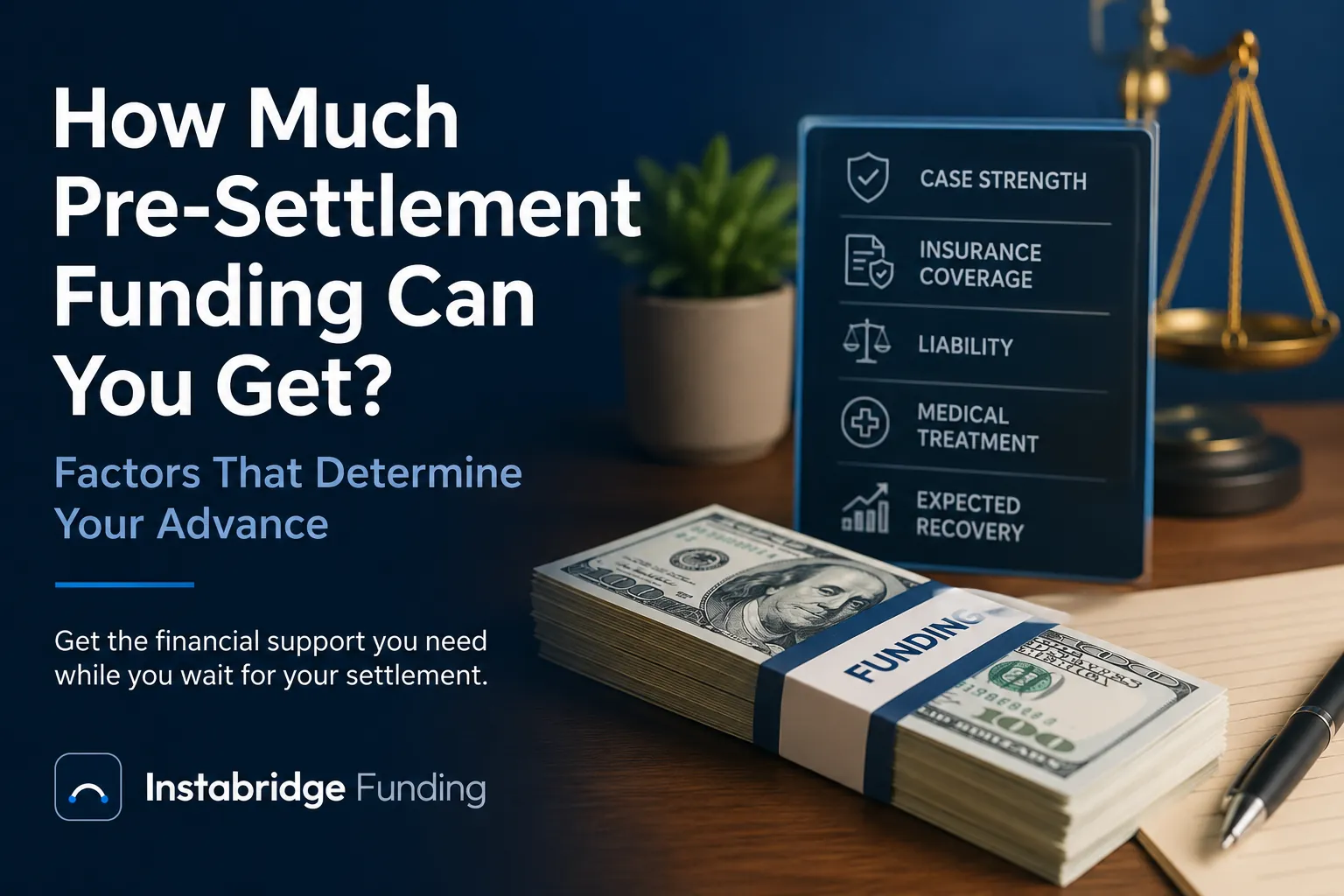
Approval considerations may include:
Confirmed insurance coverage
Policy limits
Liability strength
Bankruptcy court posture
Attorney’s assessment of collectability
Expected timeline for resolution
If recovery is expected to come primarily from insurance, funding may still be available.
If recovery depends entirely on uncertain asset distribution, approval may be more limited.
How Bankruptcy Affects Settlement Timing
Bankruptcy proceedings can slow litigation. Motions may need to be filed to lift the automatic stay, and court approval may be required for settlement agreements.
This can result in:
Extended case timelines
Additional procedural steps
Increased legal complexity
Financial pressure during these delays can be significant. Pre-settlement funding may provide temporary stability while the legal process continues.
However, advances must be structured conservatively in cases involving bankruptcy uncertainty.
The Importance of Attorney Coordination
Funding providers rely heavily on attorney input in bankruptcy-related cases.
Your attorney can clarify:
Whether insurance coverage is intact
Whether the stay has been lifted
The likelihood of settlement approval
The position of your claim in bankruptcy proceedings
Estimated recovery range
Funding companies do not independently interpret bankruptcy law. Coordination ensures that decisions reflect accurate legal strategy.
Non-Recourse Protection in Bankruptcy Cases
Pre-settlement funding remains non-recourse. If the case ultimately does not result in recovery due to bankruptcy limitations, repayment is not required.
This structure provides protection in uncertain legal environments.
However, responsible providers structure advances based on realistic recovery expectations to avoid overextending projected settlement proceeds.
Clear disclosure of risks is part of ethical funding practice.
Evaluating Risk Carefully
Bankruptcy introduces additional variables into case evaluation, including:
Duration of proceedings
Insurance carrier involvement
Competing claimants
Court oversight
Asset availability
Funding providers assess these factors collectively rather than focusing on bankruptcy alone.
In some cases, funding may be approved with adjusted advance amounts. In others, it may not be appropriate.
Each case is evaluated individually.
Why Plaintiffs Choose Instabridge
Instabridge understands that litigation does not always unfold as expected. Bankruptcy filings can complicate otherwise straightforward cases.
We evaluate applications carefully, working directly with attorneys to assess insurance coverage and realistic recovery paths.
We provide:
Clear written payoff disclosures
Flat-rate pricing without compounding
Non-recourse funding protection
Responsible advance structuring
Transparent communication throughout the process
Our approach prioritizes financial stability while respecting legal uncertainty.
Conclusion: Navigating Recovery After Bankruptcy
A defendant’s bankruptcy filing can create confusion and delay, but it does not necessarily eliminate your ability to recover compensation. Insurance coverage often remains available, and legal mechanisms exist to continue pursuing valid claims.
Pre-settlement funding may still be an option when a clear path to recovery exists, particularly through insurance proceeds. As with all cases, responsible evaluation and attorney coordination are essential.
If your personal injury case involves a defendant who has filed for bankruptcy and you need financial support during litigation, contact Instabridge. We will review your case carefully, explain how bankruptcy affects funding eligibility, and help you determine whether an advance is appropriate for your situation.