Show table of contents · 11 sections▾
- What Does an “Uncooperative” Insurance Carrier Mean?
- Why Insurance Delays Occur
- The Financial Impact of Delayed Negotiations
- How Pre-Settlement Funding Works During Insurance Delays
- How Funding Providers Evaluate These Cases
- Avoiding Premature Settlement
- Responsible Advance Structuring
- The Importance of Attorney Coordination
- Transparency in Funding Agreements
- Why Plaintiffs Choose Instabridge
- Conclusion: Stability During Insurance Negotiation Delays
Insurance companies play a central role in most personal injury cases. In many situations, claims are evaluated and negotiated in a predictable manner. However, some cases involve insurers that delay responses, dispute evidence repeatedly, or refuse to engage in meaningful settlement discussions.
When an insurance carrier becomes uncooperative, litigation timelines can extend significantly. For plaintiffs facing mounting expenses during these delays, pre-settlement funding may provide temporary financial stability while the legal process continues.
Understanding how funding works in these situations can help plaintiffs make informed decisions.
What Does an “Uncooperative” Insurance Carrier Mean?
Insurance companies have a legal duty to evaluate claims in good faith, but the negotiation process can still become difficult. Plaintiffs and attorneys may encounter insurers that:
Delay responding to settlement demands
Repeatedly request additional documentation
Dispute medical treatment despite supporting records
Challenge liability despite clear evidence
Decline to negotiate until late in litigation
These tactics can prolong resolution and increase financial pressure on injured plaintiffs.
While negotiation strategy is part of litigation, extended delays can affect both case timelines and personal finances.
Why Insurance Delays Occur
Insurance carriers may slow negotiations for several reasons, including:
Internal claim review procedures
Waiting for additional medical treatment records
Disputes over injury severity
Liability investigations
Strategic delay during litigation
Some insurers prefer to negotiate only after discovery is underway or after key depositions have been completed.
These delays can extend cases for months or even years.
The Financial Impact of Delayed Negotiations
While litigation progresses, injured plaintiffs may continue to face ongoing expenses such as:
Housing costs
Utilities
Medical bills and co-pays
Transportation expenses
Daily living costs
For individuals unable to work during recovery, prolonged insurance negotiations can create significant financial strain.
Pre-settlement funding is designed to help address these short-term financial pressures.
How Pre-Settlement Funding Works During Insurance Delays
Pre-settlement funding provides an advance based on the projected value of a pending legal claim. Because funding is non-recourse, repayment occurs only if the case resolves successfully.
Funds may be used for essential expenses while the legal process continues.
Unlike traditional financing, approval is not based on:
Credit score
Current employment
Income verification
Instead, the primary factors are the strength of the case and the likelihood of recovery.
This structure allows plaintiffs to maintain financial stability during prolonged negotiations.
How Funding Providers Evaluate These Cases
Even when an insurer is delaying negotiations, funding providers evaluate the underlying case itself.
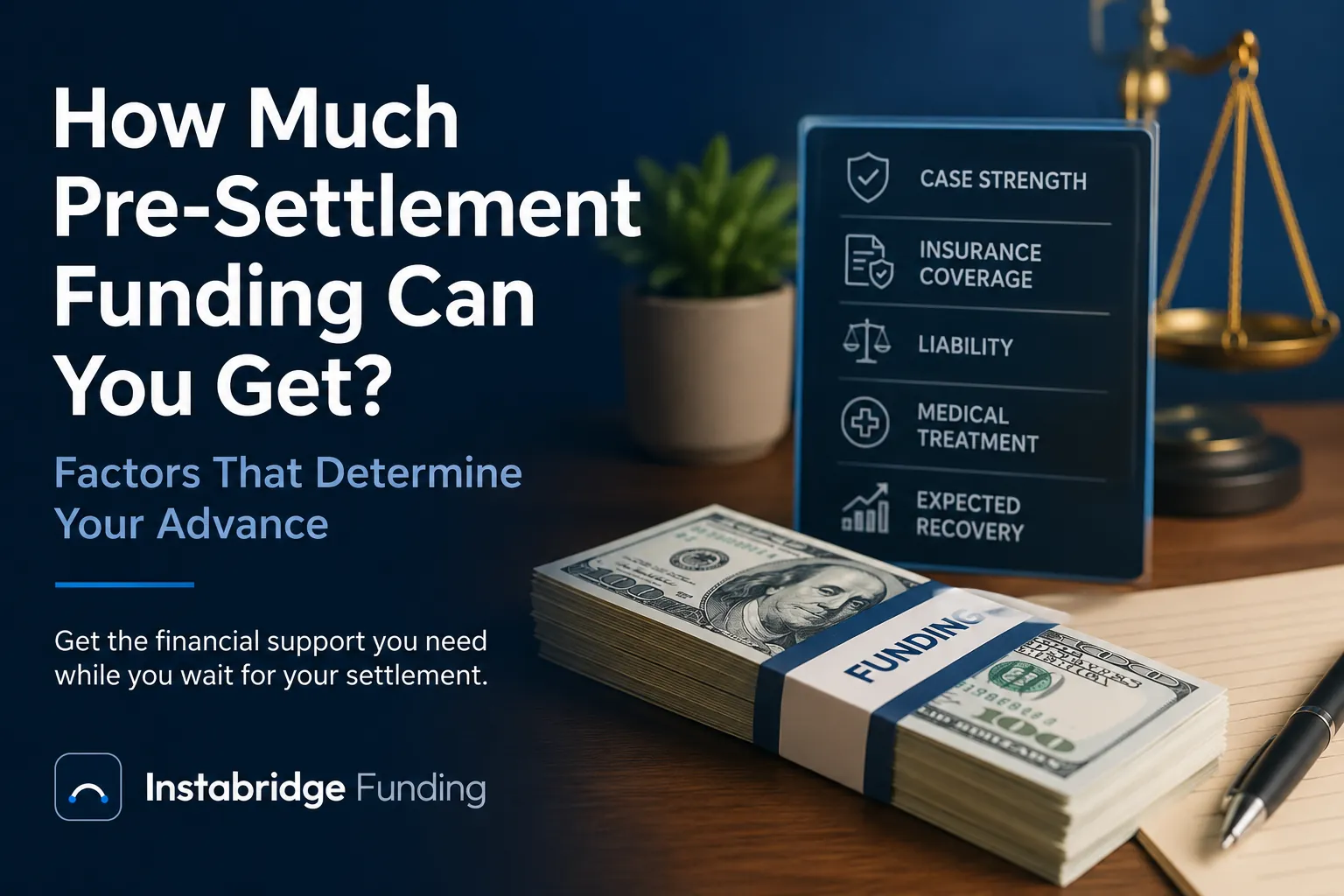
Key factors include:
Liability strength
Medical documentation
Insurance policy limits
Attorney’s settlement assessment
Litigation posture
Evidence supporting damages
An insurer’s unwillingness to negotiate early does not necessarily reduce the value of a case. Many claims resolve favorably once litigation progresses.
Funding providers rely on attorney insight when evaluating these situations.
Avoiding Premature Settlement
Financial pressure can sometimes push plaintiffs to accept lower settlement offers simply to resolve uncertainty.
Pre-settlement funding may help reduce that pressure by:
Providing temporary access to cash
Allowing time for full medical evaluation
Supporting continued treatment
Giving attorneys room to negotiate appropriately
Funding should not replace legal strategy. Instead, it provides financial breathing room so plaintiffs can make decisions based on case value rather than immediate financial needs.
Responsible Advance Structuring
Even when a case appears strong, responsible funding providers structure advances conservatively.
Evaluation considers:
Total projected settlement value
Attorney fees and litigation costs
Existing medical liens
Potential comparative fault issues
Conservative structuring protects the plaintiff’s net recovery once the case resolves.
Ethical funding prioritizes long-term financial outcomes over large initial advances.
The Importance of Attorney Coordination
Attorney coordination is essential in cases involving difficult insurance carriers.
Your attorney can clarify:
Whether negotiations have stalled
What stage of litigation the case has reached
Evidence supporting liability and damages
Expected timeline for meaningful settlement discussions
Funding providers rely on this professional assessment rather than interpreting negotiation dynamics independently.
Direct communication between counsel and the funding company ensures responsible evaluation.
Transparency in Funding Agreements
Before accepting pre-settlement funding, plaintiffs should clearly understand the terms of the agreement.
Responsible providers disclose:
Advance amount
Total repayment amount
Pricing structure
Non-recourse protections
Flat-rate pricing models help eliminate uncertainty about repayment obligations as litigation continues.
Transparency allows plaintiffs to evaluate funding within the broader financial context of their case.
Why Plaintiffs Choose Instabridge
Instabridge understands that insurance negotiations do not always move quickly or smoothly. We evaluate each case carefully, working directly with attorneys to assess the true strength of the claim.
We provide:
Clear written payoff disclosures
Flat-rate pricing without compounding
Non-recourse funding protection
Responsible advance limits
Transparent communication throughout the review process
Our goal is to support plaintiffs financially while litigation proceeds.
Conclusion: Stability During Insurance Negotiation Delays
Insurance carriers sometimes delay settlement discussions, creating financial stress for injured plaintiffs waiting for resolution. While these delays can be frustrating, they do not eliminate the potential value of a strong legal claim.
Pre-settlement funding can provide temporary financial support during extended negotiations, allowing plaintiffs to focus on recovery and litigation without immediate financial pressure.
If you are facing delays from an insurance carrier and need financial stability while your case progresses, contact Instabridge. Our team will review your case carefully, coordinate with your attorney, and help you determine whether funding is an appropriate option.