GUIDE

Pre-Settlement Funding in Cases Involving Injuries Caused by Road Hazards or Dangerous Road Conditions

Pre-Settlement Funding in Cases Involving Injuries Caused by Road Hazards or Dangerous Road Conditions

Injuries caused by dangerous road conditions — including potholes, missing guardrails, inadequate signage, poorly designed intersections, or improperly maintained surfaces — can give rise to personal injury claims against government entities, private contractors, or both. These cases involve a legal framework that differs significantly from standard motor vehicle accident claims and require careful attention to procedural requirements and the identity of the responsible party.

For plaintiffs injured due to road hazards or dangerous road conditions, understanding how these legal distinctions affect case evaluation and pre-settlement funding eligibility is important. The involvement of a government entity or public infrastructure does not prevent recovery or funding approval when the underlying claim is properly supported.

Why Road Hazard Cases Involve Unique Legal Challenges

Claims arising from dangerous road conditions differ from typical accident cases in several important ways. These include:

  • The responsible party is often a government entity subject to sovereign immunity rules and special notice of claim requirements

  • Short deadlines for filing a notice of claim apply in many jurisdictions and missing them can bar recovery entirely

  • Liability may be shared between a government entity and a private contractor responsible for road design, construction, or maintenance

  • Proving that the government had actual or constructive notice of the hazardous condition is often a central requirement

  • Damage caps applicable to government defendants may limit total recovery

Navigating these requirements demands attorneys experienced in government liability and road defect litigation.

Common Road Hazards That Give Rise to Personal Injury Claims

Dangerous road conditions arise in a variety of forms. Common examples that support personal injury claims include:

  • Large potholes or pavement failures that cause loss of vehicle control

  • Missing, damaged, or inadequate guardrails along elevated roadways or curves

  • Absent or obscured traffic signs or signals that contribute to intersection collisions

  • Improperly designed road geometry that creates dangerous merging or turning conditions

  • Standing water caused by inadequate drainage that results in hydroplaning

  • Roadway debris left by construction crews that creates collision hazards

  • Faded or missing lane markings that contribute to accidents in low-visibility conditions

Each type of hazard involves specific questions about who was responsible for the condition and whether adequate notice existed.

How Notice Requirements Affect These Claims

In cases involving government-maintained roads, establishing that the government had notice of the hazardous condition is often a threshold requirement for liability. Notice may be established through:

  • Prior complaints or reports submitted to the government entity about the condition

  • Internal maintenance records showing that the hazard was known but not repaired

  • Prior accidents at the same location documented in police or government records

  • Expert testimony establishing that the condition had existed long enough that reasonable inspection would have revealed it

Failure to establish notice can significantly weaken or defeat the claim. Gathering this evidence early in the litigation process is essential.

How Private Contractors May Share Liability

In some road hazard cases, a private contractor responsible for road design, construction, or maintenance may share liability with the government entity. Contractor liability may arise when:

  • A design defect in the road was created by a private engineering firm

  • A construction or repaving contractor left the road in a dangerous condition

  • A maintenance contractor failed to fulfill obligations under a service agreement with the government

  • A utility company excavated the road and failed to restore it properly

Identifying all potentially responsible parties expands the available sources of recovery and may affect the funding evaluation.

How Road Hazard Cases Affect Case Evaluation

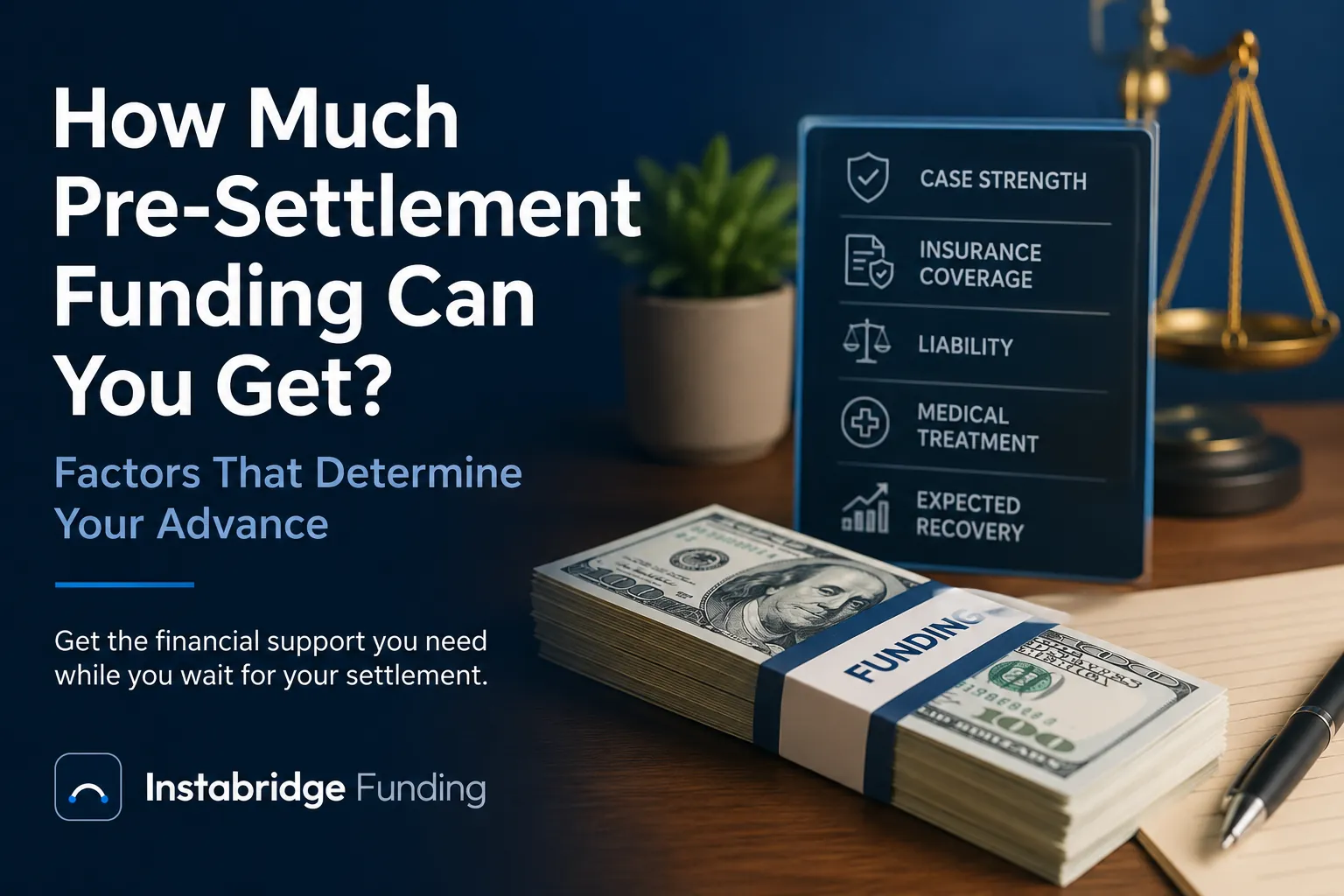
Funding providers assess road hazard cases with attention to the applicable legal framework and the strength of the available evidence. Considerations include:

  • Whether all required notices of claim have been timely filed

  • Whether the government had actual or constructive notice of the hazardous condition

  • Whether private contractors share liability and carry their own insurance coverage

  • Applicable damage caps and their effect on total recovery

  • The attorney's assessment of realistic case value given all applicable legal limitations

Cases where notice has been established and procedural requirements have been met are generally evaluated more favorably.

Can Plaintiffs Still Qualify for Funding?

Yes. Cases involving road hazards or dangerous road conditions may still qualify for pre-settlement funding. Approval depends on:

  • Medical documentation of the injury and its severity

  • Evidence establishing the hazardous condition and the defendant's responsibility for it

  • Confirmation that procedural requirements such as notice of claim have been satisfied

  • Attorney's assessment of case value given applicable legal standards and damage caps

  • Stage of litigation

Funding providers evaluate the overall strength of the claim rather than the identity of the defendant. Attorney input on procedural compliance and notice evidence is essential in these cases.

How Road Hazard Cases Can Affect Timeline

Road hazard cases involving government defendants often take longer to resolve than claims against private parties. Factors that can extend the timeline include:

  • Disputes over whether notice of claim requirements were properly satisfied

  • Government entity immunity challenges requiring motion practice

  • Discovery from government agencies that may be slower than discovery from private defendants

  • Investigation of maintenance records and prior complaint documentation held by the government

  • Expert retention related to road design standards or accident reconstruction

Pre-settlement funding can provide financial stability during this extended litigation process.

Responsible Funding Evaluation

When a case involves a road hazard or dangerous road condition, funding providers assess procedural compliance and the strength of the notice evidence carefully. Evaluation may consider:

  • Whether notice of claim and other procedural requirements have been met

  • Strength of evidence establishing the government's actual or constructive notice of the hazard

  • Applicable damage caps and their effect on available recovery

  • Insurance or self-insurance coverage available from the defendant

  • Attorney's overall assessment of realistic recovery

Advances are structured to reflect the recovery available under the applicable legal framework. Non-recourse protection ensures repayment occurs only if recovery is obtained.

The Importance of Attorney Coordination

Attorney coordination is critical in road hazard cases where procedural requirements and notice evidence must be carefully managed. Legal counsel can explain:

  • Whether all procedural requirements have been met and when they were satisfied

  • What evidence is available to establish the government's notice of the hazardous condition

  • Whether private contractors share liability and what coverage is available

  • The expected timeline for resolving procedural issues and pursuing recovery

Funding providers rely on this professional analysis to evaluate cases where the path to recovery depends on satisfying threshold legal requirements.

Why Plaintiffs Choose Instabridge

Instabridge understands that road hazard cases involve procedural complexity and legal distinctions that require careful evaluation before the strength of a claim can be assessed. Our team works directly with attorneys to assess each case based on the available notice evidence, procedural compliance, and realistic recovery potential. We provide:

  • Clear written payoff disclosures

  • Flat-rate pricing without compounding fees

  • Non-recourse funding protection

  • Responsible advance limits

  • Transparent communication throughout the review process

Our goal is to provide financial support while your case progresses toward resolution regardless of whether the responsible party is a government entity or a private contractor.

Conclusion: Funding Support After an Injury Caused by a Dangerous Road Condition

Road hazard cases involve procedural requirements and legal standards that make early attorney involvement essential. When claims are properly filed, notice is established, and liability evidence is available, pre-settlement funding may provide the financial stability needed to allow the case to proceed without the plaintiff being forced into a premature resolution. If you were injured due to a dangerous road condition and need financial support while your case is pending, contact Instabridge. Our team will review your case carefully, coordinate with your attorney, and help you determine whether pre-settlement funding is an appropriate option.
Injuries caused by dangerous road conditions — including potholes, missing guardrails, inadequate signage, poorly designed intersections, or improperly maintained surfaces — can give rise to personal injury claims against government entities, private contractors, or both. These cases involve a legal framework that differs significantly from standard motor vehicle accident claims and require careful attention to procedural requirements and the identity of the responsible party.

For plaintiffs injured due to road hazards or dangerous road conditions, understanding how these legal distinctions affect case evaluation and pre-settlement funding eligibility is important. The involvement of a government entity or public infrastructure does not prevent recovery or funding approval when the underlying claim is properly supported.

Why Road Hazard Cases Involve Unique Legal Challenges

Claims arising from dangerous road conditions differ from typical accident cases in several important ways. These include:

  • The responsible party is often a government entity subject to sovereign immunity rules and special notice of claim requirements

  • Short deadlines for filing a notice of claim apply in many jurisdictions and missing them can bar recovery entirely

  • Liability may be shared between a government entity and a private contractor responsible for road design, construction, or maintenance

  • Proving that the government had actual or constructive notice of the hazardous condition is often a central requirement

  • Damage caps applicable to government defendants may limit total recovery

Navigating these requirements demands attorneys experienced in government liability and road defect litigation.

Common Road Hazards That Give Rise to Personal Injury Claims

Dangerous road conditions arise in a variety of forms. Common examples that support personal injury claims include:

  • Large potholes or pavement failures that cause loss of vehicle control

  • Missing, damaged, or inadequate guardrails along elevated roadways or curves

  • Absent or obscured traffic signs or signals that contribute to intersection collisions

  • Improperly designed road geometry that creates dangerous merging or turning conditions

  • Standing water caused by inadequate drainage that results in hydroplaning

  • Roadway debris left by construction crews that creates collision hazards

  • Faded or missing lane markings that contribute to accidents in low-visibility conditions

Each type of hazard involves specific questions about who was responsible for the condition and whether adequate notice existed.

How Notice Requirements Affect These Claims

In cases involving government-maintained roads, establishing that the government had notice of the hazardous condition is often a threshold requirement for liability. Notice may be established through:

  • Prior complaints or reports submitted to the government entity about the condition

  • Internal maintenance records showing that the hazard was known but not repaired

  • Prior accidents at the same location documented in police or government records

  • Expert testimony establishing that the condition had existed long enough that reasonable inspection would have revealed it

Failure to establish notice can significantly weaken or defeat the claim. Gathering this evidence early in the litigation process is essential.

How Private Contractors May Share Liability

In some road hazard cases, a private contractor responsible for road design, construction, or maintenance may share liability with the government entity. Contractor liability may arise when:

  • A design defect in the road was created by a private engineering firm

  • A construction or repaving contractor left the road in a dangerous condition

  • A maintenance contractor failed to fulfill obligations under a service agreement with the government

  • A utility company excavated the road and failed to restore it properly

Identifying all potentially responsible parties expands the available sources of recovery and may affect the funding evaluation.

How Road Hazard Cases Affect Case Evaluation

Funding providers assess road hazard cases with attention to the applicable legal framework and the strength of the available evidence. Considerations include:

  • Whether all required notices of claim have been timely filed

  • Whether the government had actual or constructive notice of the hazardous condition

  • Whether private contractors share liability and carry their own insurance coverage

  • Applicable damage caps and their effect on total recovery

  • The attorney's assessment of realistic case value given all applicable legal limitations

Cases where notice has been established and procedural requirements have been met are generally evaluated more favorably.

Can Plaintiffs Still Qualify for Funding?

Yes. Cases involving road hazards or dangerous road conditions may still qualify for pre-settlement funding. Approval depends on:

  • Medical documentation of the injury and its severity

  • Evidence establishing the hazardous condition and the defendant's responsibility for it

  • Confirmation that procedural requirements such as notice of claim have been satisfied

  • Attorney's assessment of case value given applicable legal standards and damage caps

  • Stage of litigation

Funding providers evaluate the overall strength of the claim rather than the identity of the defendant. Attorney input on procedural compliance and notice evidence is essential in these cases.

How Road Hazard Cases Can Affect Timeline

Road hazard cases involving government defendants often take longer to resolve than claims against private parties. Factors that can extend the timeline include:

  • Disputes over whether notice of claim requirements were properly satisfied

  • Government entity immunity challenges requiring motion practice

  • Discovery from government agencies that may be slower than discovery from private defendants

  • Investigation of maintenance records and prior complaint documentation held by the government

  • Expert retention related to road design standards or accident reconstruction

Pre-settlement funding can provide financial stability during this extended litigation process.

Responsible Funding Evaluation

When a case involves a road hazard or dangerous road condition, funding providers assess procedural compliance and the strength of the notice evidence carefully. Evaluation may consider:

  • Whether notice of claim and other procedural requirements have been met

  • Strength of evidence establishing the government's actual or constructive notice of the hazard

  • Applicable damage caps and their effect on available recovery

  • Insurance or self-insurance coverage available from the defendant

  • Attorney's overall assessment of realistic recovery

Advances are structured to reflect the recovery available under the applicable legal framework. Non-recourse protection ensures repayment occurs only if recovery is obtained.

The Importance of Attorney Coordination

Attorney coordination is critical in road hazard cases where procedural requirements and notice evidence must be carefully managed. Legal counsel can explain:

  • Whether all procedural requirements have been met and when they were satisfied

  • What evidence is available to establish the government's notice of the hazardous condition

  • Whether private contractors share liability and what coverage is available

  • The expected timeline for resolving procedural issues and pursuing recovery

Funding providers rely on this professional analysis to evaluate cases where the path to recovery depends on satisfying threshold legal requirements.

Why Plaintiffs Choose Instabridge

Instabridge understands that road hazard cases involve procedural complexity and legal distinctions that require careful evaluation before the strength of a claim can be assessed. Our team works directly with attorneys to assess each case based on the available notice evidence, procedural compliance, and realistic recovery potential. We provide:

  • Clear written payoff disclosures

  • Flat-rate pricing without compounding fees

  • Non-recourse funding protection

  • Responsible advance limits

  • Transparent communication throughout the review process

Our goal is to provide financial support while your case progresses toward resolution regardless of whether the responsible party is a government entity or a private contractor.

Conclusion: Funding Support After an Injury Caused by a Dangerous Road Condition

Road hazard cases involve procedural requirements and legal standards that make early attorney involvement essential. When claims are properly filed, notice is established, and liability evidence is available, pre-settlement funding may provide the financial stability needed to allow the case to proceed without the plaintiff being forced into a premature resolution. If you were injured due to a dangerous road condition and need financial support while your case is pending, contact Instabridge. Our team will review your case carefully, coordinate with your attorney, and help you determine whether pre-settlement funding is an appropriate option.

Back to blogs

Other Blogs

Waiting on a Settlement? Get Cash Now!

Instabridge Funding provides fast, risk-free legal funding.

Apply Now

Waiting on a Settlement? Get Cash Now!

Instabridge Funding provides fast, risk-free legal funding.

Apply Now

Pre-settlement funding built by a lawyer.

get in touch

© 2026 Instabridge Funding. All rights reserved.

Pre-settlement funding built by a lawyer.

get in touch

© 2026 Instabridge Funding. All rights reserved.

Pre-settlement funding built by a lawyer.

get in touch

© 2026 Instabridge Funding. All rights reserved.